
AlphaFold predicted structure
IKBKB · O14920
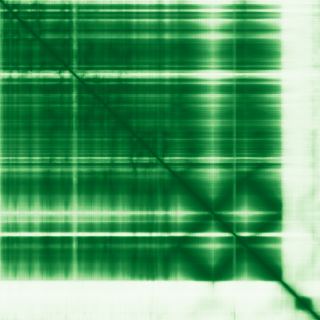
Mean pLDDT
86.6/ 100
Confident
756 residues
Confidence breakdown
- Very high(≥ 90)69%
- Confident(70–90)17%
- Low(50–70)6%
- Very low(< 50)8%
Open interactive 3D viewer
AlphaFold (Jumper et al., 2021) · CC BY 4.0
inhibitor of nuclear factor kappa B kinase subunit beta
Annotations refreshed 2 months ago.
Diagnostic Grade (Green)
COVID-19 research
BOTH monoallelic and biallelic (but BIALLELIC mutations cause a more SEVERE disease form), autosomal or pseudoautosomalPrimary immunodeficiency or monogenic inflammatory bowel disease
BOTH monoallelic and biallelic (but BIALLELIC mutations cause a more SEVERE disease form), autosomal or pseudoautosomalsevere combined immunodeficiency due to IKK2 deficiency
immunodeficiency 15a
severe combined immunodeficiency
COVID-19
combined immunodeficiency
plasma cell myeloma
lung carcinoma
systemic lupus erythematosus
skin basal cell carcinoma
colorectal adenocarcinoma
Score is the Open Targets composite evidence score (0-1). Higher = stronger gene-disease association.
Inhibitor of nuclear factor kappa-B kinase subunit beta
Serine kinase that plays an essential role in the NF-kappa-B signaling pathway which is activated by multiple stimuli such as inflammatory cytokines, bacterial or viral products, DNA damages or other cellular stresses (PubMed:20434986, PubMed:20797629, PubMed:21138416, PubMed:30337470, PubMed:9346484). Acts as a part of the canonical IKK complex in the conventional pathway of NF-kappa-B activation (PubMed:9346484). Phosphorylates inhibitors of NF-kappa-B on 2 critical serine residues (PubMed:20434986, PubMed:20797629, PubMed:21138416, PubMed:9346484). These modifications allow polyubiquitination of the inhibitors and subsequent degradation by the proteasome (PubMed:20434986, PubMed:20797629, PubMed:21138416, PubMed:9346484). In turn, free NF-kappa-B is translocated into the nucleus and activates the transcription of hundreds of genes involved in immune response, growth control, or protection against apoptosis (PubMed:20434986, PubMed:20797629, PubMed:21138416, PubMed:9346484). In addition to the NF-kappa-B inhibitors, phosphorylates several other components of the signaling pathway including NEMO/IKBKG, NF-kappa-B subunits RELA and NFKB1, as well as IKK-related kinases TBK1 and IKBKE (PubMed:11297557, PubMed:14673179, PubMed:20410276, PubMed:21138416). IKK-related kinase phosphorylations may prevent the overproduction of inflammatory mediators since they exert a negative regulation on canonical IKKs (PubMed:11297557, PubMed:20410276, PubMed:21138416). Phosphorylates FOXO3, mediating the TNF-dependent inactivation of this pro-apoptotic transcription factor (PubMed:15084260). Also phosphorylates other substrates including NAA10, NCOA3, BCL10 and IRS1 (PubMed:17213322, PubMed:19716809). Phosphorylates RIPK1 at 'Ser-25' which represses its kinase activity and consequently prevents TNF-mediated RIPK1-dependent cell death (By similarity). Phosphorylates the C-terminus of IRF5, stimulating IRF5 homodimerization and translocation into the nucleus (PubMed:25326418). Following bacterial lipopolysaccharide (LPS)-induced TLR4 endocytosis, phosphorylates STAT1 at 'Thr-749' which restricts interferon signaling and anti-inflammatory responses and promotes innate inflammatory responses (PubMed:38621137). IKBKB-mediated phosphorylation of STAT1 at 'Thr-749' promotes binding of STAT1 to the ARID5A promoter, resulting in transcriptional activation of ARID5A and subsequent ARID5A-mediated stabilization of IL6 (PubMed:32209697). It also promotes binding of STAT1 to the IL12B promoter and activation of IL12B transcription (PubMed:32209697)
IKBKB · O14920
Mean pLDDT
86.6/ 100
Confident
756 residues
Confidence breakdown
AlphaFold (Jumper et al., 2021) · CC BY 4.0