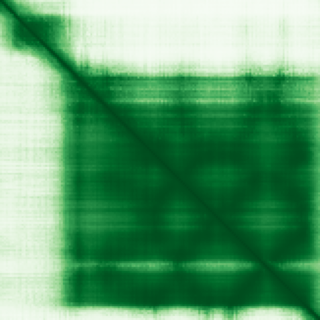
MONOALLELIC, autosomal or pseudoautosomal, imprinted status unknown
Primary immunodeficiency or monogenic inflammatory bowel disease
MONOALLELIC, autosomal or pseudoautosomal, imprinted status unknown
Disease associations (Open Targets)
Chronic mucocutaneous candidosis
0.58
psoriasis
0.57
psoriasis vulgaris
0.52
seborrheic dermatitis
0.44
erythematosquamous dermatosis
0.44
psoriatic arthritis
0.40
hidradenitis suppurativa
0.40
chronic mucocutaneous candidiasis
0.37
immune system disorder
0.37
parapsoriasis
0.37
Score is the Open Targets composite evidence score (0-1). Higher = stronger gene-disease association.
Protein function (UniProt)
Interleukin-17F
Effector cytokine of innate and adaptive immune system involved in antimicrobial host defense and maintenance of tissue integrity (PubMed:21350122). IL17A-IL17F signals via IL17RA-IL17RC heterodimeric receptor complex, triggering homotypic interaction of IL17RA and IL17RC chains with TRAF3IP2 adapter through SEFIR domains. This leads to downstream TRAF6-mediated activation of NF-kappa-B and MAPkinase pathways ultimately resulting in transcriptional activation of cytokines, chemokines, antimicrobial peptides and matrix metalloproteinases, with potential strong immune inflammation (PubMed:11574464, PubMed:11591732, PubMed:11591768, PubMed:17911633, PubMed:18684971, PubMed:21350122, PubMed:28827714). IL17A-IL17F is primarily involved in host defense against extracellular bacteria and fungi by inducing neutrophilic inflammation (By similarity). As signature effector cytokine of T-helper 17 cells (Th17), primarily induces neutrophil activation and recruitment at infection and inflammatory sites (By similarity). Stimulates the production of antimicrobial beta-defensins DEFB1, DEFB103A, and DEFB104A by mucosal epithelial cells, limiting the entry of microbes through the epithelial barriers (By similarity). IL17F homodimer can signal via IL17RC homodimeric receptor complex, triggering downstream activation of TRAF6 and NF-kappa-B signaling pathway (PubMed:32187518). Via IL17RC induces transcriptional activation of IL33, a potent cytokine that stimulates group 2 innate lymphoid cells and adaptive T-helper 2 cells involved in pulmonary allergic response to fungi. Likely via IL17RC, promotes sympathetic innervation of peripheral organs by coordinating the communication between gamma-delta T cells and parenchymal cells. Stimulates sympathetic innervation of thermogenic adipose tissue by driving TGFB1 expression (By similarity). Regulates the composition of intestinal microbiota and immune tolerance by inducing antimicrobial proteins that specifically control the growth of commensal Firmicutes and Bacteroidetes (By similarity)