
AlphaFold predicted structure
ILF3 · Q12906
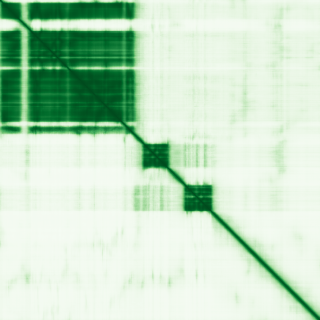
Mean pLDDT
66.8/ 100
Low
894 residues
Confidence breakdown
- Very high(≥ 90)42%
- Confident(70–90)9%
- Low(50–70)4%
- Very low(< 50)45%
Open interactive 3D viewer
AlphaFold (Jumper et al., 2021) · CC BY 4.0
interleukin enhancer binding factor 3
Annotations refreshed 2 months ago.
Moderate Evidence (Amber)
COVID-19 research
Unknownneurodegenerative disease
Parkinson disease
osteoarthritis
Alzheimer disease
multiple sclerosis
lysosomal storage disease
Knee pain
osteoarthritis, knee
substance-related disorder
familial hypercholesterolemia
Score is the Open Targets composite evidence score (0-1). Higher = stronger gene-disease association.
Interleukin enhancer-binding factor 3
RNA-binding protein that plays an essential role in the biogenesis of circular RNAs (circRNAs) which are produced by back-splicing circularization of pre-mRNAs. Within the nucleus, promotes circRNAs processing by stabilizing the regulatory elements residing in the flanking introns of the circularized exons. Plays thereby a role in the back-splicing of a subset of circRNAs (PubMed:28625552). As a consequence, participates in a wide range of transcriptional and post-transcriptional processes. Binds to poly-U elements and AU-rich elements (AREs) in the 3'-UTR of target mRNAs (PubMed:14731398). Upon viral infection, ILF3 accumulates in the cytoplasm and participates in the innate antiviral response (PubMed:21123651, PubMed:34110282). Mechanistically, ILF3 becomes phosphorylated and activated by the double-stranded RNA-activated protein kinase/PKR which releases ILF3 from cellular mature circRNAs. In turn, unbound ILF3 molecules are able to interact with and thus inhibit viral mRNAs (PubMed:21123651, PubMed:28625552)
ILF3 · Q12906
Mean pLDDT
66.8/ 100
Low
894 residues
Confidence breakdown
AlphaFold (Jumper et al., 2021) · CC BY 4.0