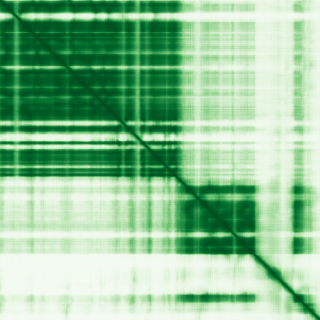
Score is the Open Targets composite evidence score (0-1). Higher = stronger gene-disease association.
Protein function (UniProt)
Integrator complex subunit 13
Component of the integrator complex, a multiprotein complex that terminates RNA polymerase II (Pol II) transcription in the promoter-proximal region of genes (PubMed:38570683, PubMed:38823386). The integrator complex provides a quality checkpoint during transcription elongation by driving premature transcription termination of transcripts that are unfavorably configured for transcriptional elongation: the complex terminates transcription by (1) catalyzing dephosphorylation of the C-terminal domain (CTD) of Pol II subunit POLR2A/RPB1 and SUPT5H/SPT5, (2) degrading the exiting nascent RNA transcript via endonuclease activity and (3) promoting the release of Pol II from bound DNA (PubMed:38570683). The integrator complex is also involved in terminating the synthesis of non-coding Pol II transcripts, such as enhancer RNAs (eRNAs), small nuclear RNAs (snRNAs), telomerase RNAs and long non-coding RNAs (lncRNAs) (PubMed:32647223). Within the integrator complex, INTS13 is part of the integrator tail module and acts as a platform for the recruitment of transcription factors at promoters (PubMed:38823386, PubMed:38906142). At prophase, mediates recruitment of cytoplasmic dynein to the nuclear envelope, a step important for proper centrosome-nucleus coupling (PubMed:23097494, PubMed:23904267). At G2/M phase, may be required for proper spindle formation and execution of cytokinesis (PubMed:23097494, PubMed:23904267)