
AlphaFold predicted structure
INTU · Q9ULD6
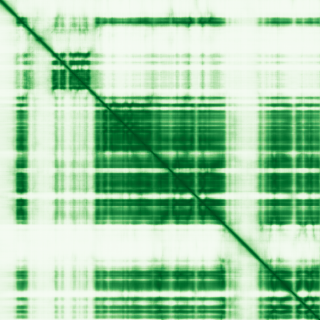
Mean pLDDT
66.9/ 100
Low
942 residues
Confidence breakdown
- Very high(≥ 90)19%
- Confident(70–90)36%
- Low(50–70)12%
- Very low(< 50)32%
Open interactive 3D viewer
AlphaFold (Jumper et al., 2021) · CC BY 4.0
inturned planar cell polarity protein
Annotations refreshed 3 months ago.
Diagnostic Grade (Green)
Fetal anomalies
BIALLELIC, autosomal or pseudoautosomalSkeletal ciliopathies
BIALLELIC, autosomal or pseudoautosomalThoracic dystrophies
Ductal plate malformation
BIALLELIC, autosomal or pseudoautosomalNon-syndromic familial congenital anorectal malformations
short rib dysplasia
short-rib thoracic dysplasia 7/20 with polydactyly, digenic
orofaciodigital syndrome 17
short-rib thoracic dysplasia 20 with polydactyly
INTU-related skeletal ciliopathy
orofaciodigital syndrome
ovarian neoplasm
neurodegenerative disease
short rib-polydactyly syndrome
open-angle glaucoma
Score is the Open Targets composite evidence score (0-1). Higher = stronger gene-disease association.
Protein inturned
Plays a key role in ciliogenesis and embryonic development. Regulator of cilia formation by controlling the organization of the apical actin cytoskeleton and the positioning of the basal bodies at the apical cell surface, which in turn is essential for the normal orientation of elongating ciliary microtubules. Plays a key role in definition of cell polarity via its role in ciliogenesis but not via conversion extension. Has an indirect effect on hedgehog signaling (By similarity). Proposed to function as core component of the CPLANE (ciliogenesis and planar polarity effectors) complex involved in the recruitment of peripheral IFT-A proteins to basal bodies (PubMed:27158779). Required for recruitment of CPLANE2 to the mother centriole (By similarity). Binds phosphatidylinositol 3-phosphate with highest affinity, followed by phosphatidylinositol 4-phosphate and phosphatidylinositol 5-phosphate (By similarity)
INTU · Q9ULD6
Mean pLDDT
66.9/ 100
Low
942 residues
Confidence breakdown
AlphaFold (Jumper et al., 2021) · CC BY 4.0