Skip to content
GenoLensGenoLens

INVS

Chr 9q31.1

inversin

MANE:
ENST00000262457.7

Annotations refreshed 1 month ago.

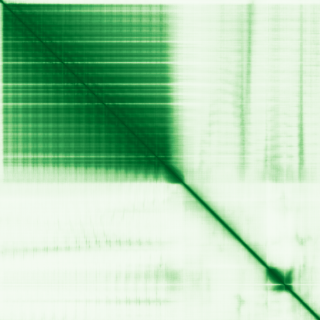
Predicted protein structure

Clinical relevance (Genomics England PanelApp)

Diagnostic Grade (Green)

  • Cystic kidney disease

    BIALLELIC, autosomal or pseudoautosomal
  • Fetal anomalies

    BIALLELIC, autosomal or pseudoautosomal
  • Neonatal cholestasis

    BIALLELIC, autosomal or pseudoautosomal
  • Rare multisystem ciliopathy disorders

    BIALLELIC, autosomal or pseudoautosomal
  • Renal ciliopathies

    BIALLELIC, autosomal or pseudoautosomal
  • Tubulointerstitial kidney disease

    BIALLELIC, autosomal or pseudoautosomal
  • Unexplained kidney failure in young people

    BIALLELIC, autosomal or pseudoautosomal
  • Childhood onset dystonia, chorea or related movement disorder

+7 more panels — install the extension to see the full list inline on any page.

Disease associations (Open Targets)

  • nephronophthisis 2

    0.76
  • nephronophthisis

    0.74
  • Infantile nephronophthisis

    0.66
  • Senior-Loken syndrome

    0.56
  • hereditary disease

    0.42
  • cystic kidney disease

    0.29
  • urinary system disorder

    0.26
  • intestinal infectious disease

    0.26
  • Abnormality of the urinary system

    0.26
  • insomnia

    0.25

Score is the Open Targets composite evidence score (0-1). Higher = stronger gene-disease association.

Protein function (UniProt)

Inversin

Required for normal renal development and establishment of left-right axis. Probably acts as a molecular switch between different Wnt signaling pathways. Inhibits the canonical Wnt pathway by targeting cytoplasmic disheveled (DVL1) for degradation by the ubiquitin-proteasome. This suggests that it is required in renal development to oppose the repression of terminal differentiation of tubular epithelial cells by Wnt signaling. Involved in the organization of apical junctions in kidney cells together with NPHP1, NPHP4 and RPGRIP1L/NPHP8 (By similarity). Does not seem to be strictly required for ciliogenesis (By similarity)

Curated MONDO disease pages that list INVS among their top associated genes.

Data sources: HGNC (CC BY 4.0), AlphaFold (CC BY 4.0, Jumper et al. Nature 2021), Genomics England PanelApp (CC BY 4.0), ClinGen, Open Targets (CC0), UniProt.

Not for sole clinical decision-making. Always verify against primary sources.