
AlphaFold predicted structure
IPO13 · O94829
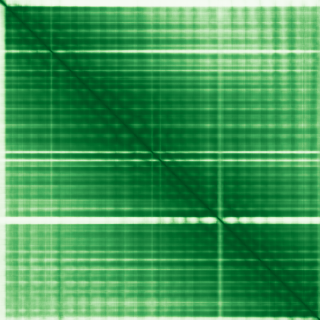
Mean pLDDT
90.5/ 100
Very high
963 residues
Confidence breakdown
- Very high(≥ 90)80%
- Confident(70–90)14%
- Low(50–70)3%
- Very low(< 50)4%
Open interactive 3D viewer
AlphaFold (Jumper et al., 2021) · CC BY 4.0
importin 13
Annotations refreshed 3 months ago.
Moderate Evidence (Amber)
Structural eye disease
BIALLELIC, autosomal or pseudoautosomalParkinson disease
lysosomal storage disease
Alzheimer disease
neurodegenerative disease
multiple sclerosis
Crohn disease
non-small cell lung carcinoma
pterygium
endometrial carcinoma
neoplasm
Score is the Open Targets composite evidence score (0-1). Higher = stronger gene-disease association.
Importin-13
Functions in nuclear protein import as nuclear transport receptor. Serves as receptor for nuclear localization signals (NLS) in cargo substrates. Is thought to mediate docking of the importin/substrate complex to the nuclear pore complex (NPC) through binding to nucleoporin and the complex is subsequently translocated through the pore by an energy requiring, Ran-dependent mechanism. At the nucleoplasmic side of the NPC, Ran binds to the importin, the importin/substrate complex dissociates and importin is re-exported from the nucleus to the cytoplasm where GTP hydrolysis releases Ran. The directionality of nuclear import is thought to be conferred by an asymmetric distribution of the GTP- and GDP-bound forms of Ran between the cytoplasm and nucleus (By similarity). Mediates the nuclear import of UBC9, the RBM8A/MAGOH complex, PAX6 and probably other members of the paired homeobox family. Also mediates nuclear export of eIF-1A, and the cytoplasmic release of eIF-1A is triggered by the loading of import substrates onto IPO13
IPO13 · O94829
Mean pLDDT
90.5/ 100
Very high
963 residues
Confidence breakdown
AlphaFold (Jumper et al., 2021) · CC BY 4.0