
AlphaFold predicted structure
IRAK1 · P51617
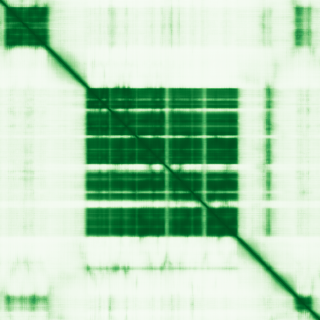
Mean pLDDT
68.6/ 100
Low
712 residues
Confidence breakdown
- Very high(≥ 90)38%
- Confident(70–90)18%
- Low(50–70)7%
- Very low(< 50)38%
Open interactive 3D viewer
AlphaFold (Jumper et al., 2021) · CC BY 4.0
interleukin 1 receptor associated kinase 1
Annotations refreshed 2 months ago.
Diagnostic Grade (Green)
COVID-19 research
X-LINKED: hemizygous mutation in males, biallelic mutations in femalesIntellectual disability
UnknownPrimary immunodeficiency or monogenic inflammatory bowel disease
X-LINKED: hemizygous mutation in males, biallelic mutations in femalesmyelofibrosis
primary myelofibrosis
systemic lupus erythematosus
neoplasm
neurodegenerative disease
acquired polycythemia vera
plasma cell myeloma
autoimmune disorder of central nervous system
rheumatoid arthritis
Rett syndrome
Score is the Open Targets composite evidence score (0-1). Higher = stronger gene-disease association.
Interleukin-1 receptor-associated kinase 1
Serine/threonine-protein kinase that plays a critical role in initiating innate immune response against foreign pathogens. Involved in Toll-like receptor (TLR) and IL-1R signaling pathways. Is rapidly recruited by MYD88 to the receptor-signaling complex upon TLR activation. Association with MYD88 leads to IRAK1 phosphorylation by IRAK4 and subsequent autophosphorylation and kinase activation. Phosphorylates E3 ubiquitin ligases Pellino proteins (PELI1, PELI2 and PELI3) to promote pellino-mediated polyubiquitination of IRAK1. Then, the ubiquitin-binding domain of IKBKG/NEMO binds to polyubiquitinated IRAK1 bringing together the IRAK1-MAP3K7/TAK1-TRAF6 complex and the NEMO-IKKA-IKKB complex. In turn, MAP3K7/TAK1 activates IKKs (CHUK/IKKA and IKBKB/IKKB) leading to NF-kappa-B nuclear translocation and activation. Alternatively, phosphorylates TIRAP to promote its ubiquitination and subsequent degradation. Phosphorylates the interferon regulatory factor 7 (IRF7) to induce its activation and translocation to the nucleus, resulting in transcriptional activation of type I IFN genes, which drive the cell in an antiviral state. When sumoylated, translocates to the nucleus and phosphorylates STAT3
IRAK1 · P51617
Mean pLDDT
68.6/ 100
Low
712 residues
Confidence breakdown
AlphaFold (Jumper et al., 2021) · CC BY 4.0