
AlphaFold predicted structure
IRF2BPL · Q9H1B7
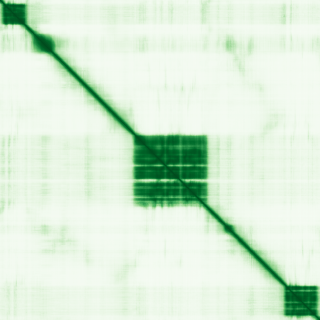
Mean pLDDT
60.1/ 100
Low
796 residues
Confidence breakdown
- Very high(≥ 90)22%
- Confident(70–90)17%
- Low(50–70)11%
- Very low(< 50)50%
Open interactive 3D viewer
AlphaFold (Jumper et al., 2021) · CC BY 4.0
interferon regulatory factor 2 binding protein like
Annotations refreshed 2 months ago.
Diagnostic Grade (Green)
Ataxia and cerebellar anomalies - narrow panel
MONOALLELIC, autosomal or pseudoautosomal, NOT imprintedChildhood onset dystonia, chorea or related movement disorder
MONOALLELIC, autosomal or pseudoautosomal, NOT imprintedDDG2P
MONOALLELIC, autosomal or pseudoautosomal, imprinted status unknownEarly onset or syndromic epilepsy
MONOALLELIC, autosomal or pseudoautosomal, imprinted status unknownHereditary ataxia with onset in adulthood
MONOALLELIC, autosomal or pseudoautosomal, NOT imprintedIntellectual disability
MONOALLELIC, autosomal or pseudoautosomal, imprinted status unknownneurodevelopmental disorder with regression, abnormal movements, loss of speech, and seizures
hereditary disease
neurodevelopmental disorder
neurodegenerative disease
autism spectrum disorder
Intellectual disability
Seizure
Abnormality of the skeletal system
Global developmental delay
Spastic paraplegia
Score is the Open Targets composite evidence score (0-1). Higher = stronger gene-disease association.
Probable E3 ubiquitin-protein ligase IRF2BPL
Probable E3 ubiquitin protein ligase involved in the proteasome-mediated ubiquitin-dependent degradation of target proteins (PubMed:29374064). Through the degradation of CTNNB1, functions downstream of FOXF2 to negatively regulate the Wnt signaling pathway (PubMed:29374064). Probably plays a role in the development of the central nervous system and in neuronal maintenance (Probable). Also acts as a transcriptional regulator of genes controlling female reproductive function. May play a role in gene transcription by transactivating GNRH1 promoter and repressing PENK promoter (By similarity)
IRF2BPL · Q9H1B7
Mean pLDDT
60.1/ 100
Low
796 residues
Confidence breakdown
AlphaFold (Jumper et al., 2021) · CC BY 4.0