
AlphaFold predicted structure
IRF4 · Q15306
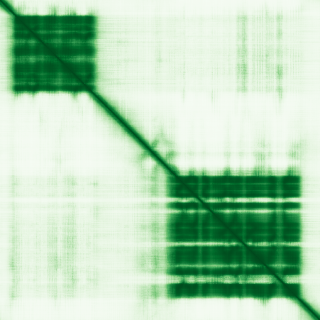
Mean pLDDT
71.6/ 100
Confident
451 residues
Confidence breakdown
- Very high(≥ 90)46%
- Confident(70–90)12%
- Low(50–70)8%
- Very low(< 50)34%
Open interactive 3D viewer
AlphaFold (Jumper et al., 2021) · CC BY 4.0
interferon regulatory factor 4
Annotations refreshed 3 months ago.
Diagnostic Grade (Green)
COVID-19 research
MONOALLELIC, autosomal or pseudoautosomal, imprinted status unknownPrimary immunodeficiency or monogenic inflammatory bowel disease
MONOALLELIC, autosomal or pseudoautosomal, NOT imprintedFetal anomalies
BOTH monoallelic and biallelic, autosomal or pseudoautosomalPigmentary skin disorders
Multiple monogenic benign skin tumours
MONOALLELIC, autosomal or pseudoautosomal, NOT imprintedB-cell chronic lymphocytic leukemia
melanoma
plasma cell myeloma
cutaneous melanoma
neurodegenerative disease
skin cancer
skin neoplasm
hair color
skin disorder
neoplasm
Score is the Open Targets composite evidence score (0-1). Higher = stronger gene-disease association.
Interferon regulatory factor 4
Transcriptional activator. Binds to the interferon-stimulated response element (ISRE) of the MHC class I promoter. Binds the immunoglobulin lambda light chain enhancer, together with PU.1. Probably plays a role in ISRE-targeted signal transduction mechanisms specific to lymphoid cells. Involved in CD8(+) dendritic cell differentiation by forming a complex with the BATF-JUNB heterodimer in immune cells, leading to recognition of AICE sequence (5'-TGAnTCA/GAAA-3'), an immune-specific regulatory element, followed by cooperative binding of BATF and IRF4 and activation of genes
Curated MONDO disease pages that list IRF4 among their top associated genes.
IRF4 · Q15306
Mean pLDDT
71.6/ 100
Confident
451 residues
Confidence breakdown
AlphaFold (Jumper et al., 2021) · CC BY 4.0