Skip to content
GenoLensGenoLens

IRF9

Chr 14q12

interferon regulatory factor 9

MANE:
ENST00000396864.8

Annotations refreshed 9 hours ago.

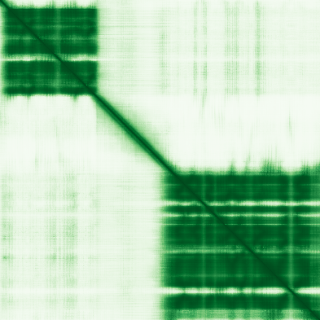
Predicted protein structure

Clinical relevance (Genomics England PanelApp)

Diagnostic Grade (Green)

  • COVID-19 research

    BIALLELIC, autosomal or pseudoautosomal
  • Primary immunodeficiency or monogenic inflammatory bowel disease

    BIALLELIC, autosomal or pseudoautosomal

Disease associations (Open Targets)

  • immunodeficiency 65, susceptibility to viral infections

    0.50
  • neoplasm

    0.11
  • nonpapillary renal cell carcinoma

    0.09
  • rheumatoid arthritis

    0.09
  • pulmonary arterial hypertension

    0.09
  • lung cancer

    0.08
  • lung carcinoma

    0.08
  • acute promyelocytic leukemia

    0.08
  • acute myeloid leukemia

    0.07
  • cancer

    0.07

Score is the Open Targets composite evidence score (0-1). Higher = stronger gene-disease association.

Protein function (UniProt)

Interferon regulatory factor 9

Transcription factor that plays an essential role in anti-viral immunity. It mediates signaling by type I IFNs (IFN-alpha and IFN-beta). Following type I IFN binding to cell surface receptors, Jak kinases (TYK2 and JAK1) are activated, leading to tyrosine phosphorylation of STAT1 and STAT2. IRF9/ISGF3G associates with the phosphorylated STAT1:STAT2 dimer to form a complex termed ISGF3 transcription factor, that enters the nucleus. ISGF3 binds to the IFN stimulated response element (ISRE) to activate the transcription of interferon stimulated genes, which drive the cell in an antiviral state

Data sources: HGNC (CC BY 4.0), AlphaFold (CC BY 4.0, Jumper et al. Nature 2021), Genomics England PanelApp (CC BY 4.0), ClinGen, Open Targets (CC0), UniProt.

Not for sole clinical decision-making. Always verify against primary sources.