
AlphaFold predicted structure
ITCH · Q96J02
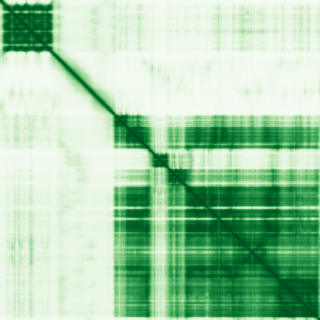
Mean pLDDT
74.7/ 100
Confident
903 residues
Confidence breakdown
- Very high(≥ 90)36%
- Confident(70–90)35%
- Low(50–70)5%
- Very low(< 50)23%
Open interactive 3D viewer
AlphaFold (Jumper et al., 2021) · CC BY 4.0
itchy E3 ubiquitin protein ligase
Annotations refreshed 3 months ago.
Diagnostic Grade (Green)
COVID-19 research
BIALLELIC, autosomal or pseudoautosomalDDG2P
BIALLELIC, autosomal or pseudoautosomalPrimary immunodeficiency or monogenic inflammatory bowel disease
BIALLELIC, autosomal or pseudoautosomalAutoinflammatory disorders
BIALLELIC, autosomal or pseudoautosomalFetal anomalies
BIALLELIC, autosomal or pseudoautosomalIntellectual disability
BIALLELIC, autosomal or pseudoautosomalRespiratory ciliopathies including non-CF bronchiectasis
BIALLELIC, autosomal or pseudoautosomalsyndromic multisystem autoimmune disease due to ITCH deficiency
autoimmune polyendocrine syndrome type 1
severe acute respiratory syndrome
metabolic dysfunction-associated steatotic liver disease
obesity and hypopigmentation
neurodegenerative disease
Irritability
malignant renal pelvis neoplasm
hereditary disease
metabolic syndrome
Score is the Open Targets composite evidence score (0-1). Higher = stronger gene-disease association.
E3 ubiquitin-protein ligase Itchy homolog
Acts as an Acts as an E3 ubiquitin-protein ligase which accepts ubiquitin from an E2 ubiquitin-conjugating enzyme in the form of a thioester and then directly transfers the ubiquitin to targeted substrates (PubMed:11046148, PubMed:14602072, PubMed:15051726, PubMed:16387660, PubMed:17028573, PubMed:18718448, PubMed:18718449, PubMed:19116316, PubMed:19592251, PubMed:19881509, PubMed:20068034, PubMed:20392206, PubMed:20491914, PubMed:23146885, PubMed:24790097, PubMed:25631046). Catalyzes 'Lys-29'-, 'Lys-48'- and 'Lys-63'-linked ubiquitin conjugation (PubMed:17028573, PubMed:18718448, PubMed:19131965, PubMed:19881509). Involved in the control of inflammatory signaling pathways (PubMed:19131965). Essential component of a ubiquitin-editing protein complex, comprising also TNFAIP3, TAX1BP1 and RNF11, that ensures the transient nature of inflammatory signaling pathways (PubMed:19131965). Promotes the association of the complex after TNF stimulation (PubMed:19131965). Once the complex is formed, TNFAIP3 deubiquitinates 'Lys-63' polyubiquitin chains on RIPK1 and catalyzes the formation of 'Lys-48'-polyubiquitin chains (PubMed:19131965). This leads to RIPK1 proteasomal degradation and consequently termination of the TNF- or LPS-mediated activation of NFKB1 (PubMed:19131965). Ubiquitinates RIPK2 by 'Lys-63'-linked conjugation and influences NOD2-dependent signal transduction pathways (PubMed:19592251). Regulates the transcriptional activity of several transcription factors, and probably plays an important role in the regulation of immune response (PubMed:18718448, PubMed:20491914). Ubiquitinates NFE2 by 'Lys-63' linkages and is implicated in the control of the development of hematopoietic lineages (PubMed:18718448). Mediates JUN ubiquitination and degradation (By similarity). Mediates JUNB ubiquitination and degradation (PubMed:16387660). Critical regulator of type 2 helper T (Th2) cell cytokine production by inducing JUNB ubiquitination and degradation (By similarity). Involved in the negative regulation of MAVS-dependent cellular antiviral responses (PubMed:19881509). Ubiquitinates MAVS through 'Lys-48'-linked conjugation resulting in MAVS proteasomal degradation (PubMed:19881509). Following ligand stimulation, regulates sorting of Wnt receptor FZD4 to the degradative endocytic pathway probably by modulating PI42KA activity (PubMed:23146885). Ubiquitinates PI4K2A and negatively regulates its catalytic activity (PubMed:23146885). Ubiquitinates chemokine receptor CXCR4 and regulates sorting of CXCR4 to the degradative endocytic pathway following ligand stimulation by ubiquitinating endosomal sorting complex required for transport ESCRT-0 components HGS and STAM (PubMed:14602072, PubMed:23146885, PubMed:34927784). Targets DTX1 for lysosomal degradation and controls NOTCH1 degradation, in the absence of ligand, through 'Lys-29'-linked polyubiquitination (PubMed:17028573, PubMed:18628966, PubMed:23886940). Ubiquitinates SNX9 (PubMed:20491914). Ubiquitinates MAP3K7 through 'Lys-48'-linked conjugation (By similarity). Together with UBR5, involved in the regulation of apoptosis and reactive oxygen species levels through the ubiquitination and proteasomal degradation of TXNIP: catalyzes 'Lys-48'-/'Lys-63'-branched ubiquitination of TXNIP (PubMed:20068034, PubMed:29378950). ITCH synthesizes 'Lys-63'-linked chains, while UBR5 is branching multiple 'Lys-48'-linked chains of substrate initially modified (PubMed:29378950). Mediates the antiapoptotic activity of epidermal growth factor through the ubiquitination and proteasomal degradation of p15 BID (PubMed:20392206). Ubiquitinates BRAT1 and this ubiquitination is enhanced in the presence of NDFIP1 (PubMed:25631046). Inhibits the replication of influenza A virus (IAV) via ubiquitination of IAV matrix protein 1 (M1) through 'Lys-48'-linked conjugation resulting in M1 proteasomal degradation (PubMed:30328013). Ubiquitinates NEDD9/HEF1, resulting in proteasomal degradation of NEDD9/HEF1 (PubMed:15051726)
ITCH · Q96J02
Mean pLDDT
74.7/ 100
Confident
903 residues
Confidence breakdown
AlphaFold (Jumper et al., 2021) · CC BY 4.0