Skip to content
GenoLensGenoLens

ITGA2B

Chr 17q21.31

integrin subunit alpha 2b

Aliases:
CD41B, CD41, PPP1R93, GPIIb
MANE:
ENST00000262407.6

Annotations refreshed 9 hours ago.

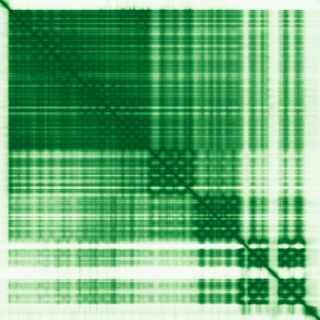
Predicted protein structure

Clinical relevance (Genomics England PanelApp)

Diagnostic Grade (Green)

  • Bleeding and platelet disorders

    BOTH monoallelic and biallelic, autosomal or pseudoautosomal
  • Inherited bleeding disorders

    BOTH monoallelic and biallelic, autosomal or pseudoautosomal
  • Cytopenia - NOT Fanconi anaemia

    BIALLELIC, autosomal or pseudoautosomal
  • Cytopenias and congenital anaemias

Disease associations (Open Targets)

  • Glanzmann thrombasthenia 1

    0.84
  • Glanzmann thrombasthenia

    0.75
  • autosomal dominant macrothrombocytopenia

    0.69
  • cancer

    0.60
  • myocardial infarction

    0.57
  • acute coronary syndrome

    0.54
  • Noonan syndrome

    0.53
  • hypertrophic cardiomyopathy

    0.51
  • Costello syndrome

    0.50
  • Recurrent thrombophlebitis

    0.50

Score is the Open Targets composite evidence score (0-1). Higher = stronger gene-disease association.

Protein function (UniProt)

Integrin alpha-IIb

Integrin alpha-IIb/beta-3 (ITGA2B:ITGB3) is a receptor for fibronectin, fibrinogen, plasminogen, prothrombin, thrombospondin and vitronectin. It recognizes the sequence R-G-D in a wide array of ligands. It recognizes the sequence H-H-L-G-G-G-A-K-Q-A-G-D-V in fibrinogen gamma chain (By similarity). Following activation integrin alpha-IIb/beta-3 brings about platelet/platelet interaction through binding of soluble fibrinogen (PubMed:9111081). This step leads to rapid platelet aggregation which physically plugs ruptured endothelial cell surface (By similarity). Integrin ITGA2B:ITGB3 is also the receptor of erythrocyte-specific ICAM4 ligand involved in heterotypic cell-cell adhesion between erythrocytes and activated platelets (PubMed:12477717)

Data sources: HGNC (CC BY 4.0), AlphaFold (CC BY 4.0, Jumper et al. Nature 2021), Genomics England PanelApp (CC BY 4.0), ClinGen, Open Targets (CC0), UniProt.

Not for sole clinical decision-making. Always verify against primary sources.