Skip to content
GenoLensGenoLens

ITGA3

Chr 17q21.33

integrin subunit alpha 3

Aliases:
CD49c, VLA3a, VCA-2, GAP-B3
MANE:
ENST00000320031.13

Annotations refreshed 1 month ago.

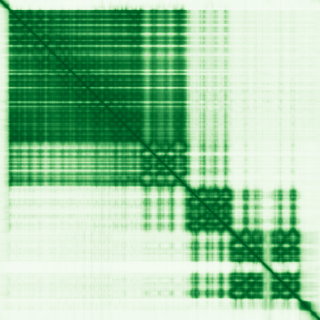
Predicted protein structure

Clinical relevance (Genomics England PanelApp)

Diagnostic Grade (Green)

  • Childhood interstitial lung disease

    BIALLELIC, autosomal or pseudoautosomal
  • DDG2P

    BIALLELIC, autosomal or pseudoautosomal
  • Epidermolysis bullosa

    BIALLELIC, autosomal or pseudoautosomal
  • Epidermolysis bullosa and congenital skin fragility

    BIALLELIC, autosomal or pseudoautosomal
  • Familial pulmonary fibrosis

    BIALLELIC, autosomal or pseudoautosomal
  • Fetal anomalies

    BIALLELIC, autosomal or pseudoautosomal
  • Proteinuric renal disease

    BIALLELIC, autosomal or pseudoautosomal
  • Unexplained kidney failure in young people

    BIALLELIC, autosomal or pseudoautosomal

+1 more panels — install the extension to see the full list inline on any page.

Disease associations (Open Targets)

  • epidermolysis bullosa, junctional 7, with interstitial lung disease and nephrotic syndrome

    0.80
  • Congenital nephrotic syndrome-interstitial lung disease-epidermolysis bullosa syndrome

    0.77
  • neurodegenerative disease

    0.50
  • junctional epidermolysis bullosa

    0.37
  • Junctional epidermolysis bullosa, Herlitz type

    0.37
  • epidermolysis bullosa simplex 4, localized or generalized intermediate, autosomal recessive

    0.37
  • nephrotic syndrome

    0.34
  • asthma

    0.27
  • type 2 diabetes mellitus

    0.21
  • hereditary disease

    0.19

Score is the Open Targets composite evidence score (0-1). Higher = stronger gene-disease association.

Protein function (UniProt)

Integrin alpha-3

Integrin alpha-3/beta-1 is a receptor for fibronectin, laminin, collagen, epiligrin, thrombospondin and CSPG4. Integrin alpha-3/beta-1 provides a docking site for FAP (seprase) at invadopodia plasma membranes in a collagen-dependent manner and hence may participate in the adhesion, formation of invadopodia and matrix degradation processes, promoting cell invasion. Alpha-3/beta-1 may mediate with LGALS3 the stimulation by CSPG4 of endothelial cells migration

Data sources: HGNC (CC BY 4.0), AlphaFold (CC BY 4.0, Jumper et al. Nature 2021), Genomics England PanelApp (CC BY 4.0), ClinGen, Open Targets (CC0), UniProt.

Not for sole clinical decision-making. Always verify against primary sources.