AlphaFold predicted structure
ITGA6 · P23229
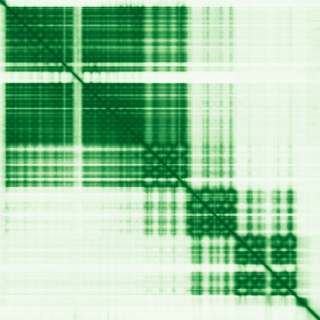
Mean pLDDT
80.4/ 100
Confident
1,130 residues
Confidence breakdown
- Very high(≥ 90)43%
- Confident(70–90)37%
- Low(50–70)8%
- Very low(< 50)12%
AlphaFold (Jumper et al., 2021) · CC BY 4.0
integrin subunit alpha 6
Annotations refreshed 10 hours ago.
Diagnostic Grade (Green)
Epidermolysis bullosa
BIALLELIC, autosomal or pseudoautosomalEpidermolysis bullosa and congenital skin fragility
BIALLELIC, autosomal or pseudoautosomalFetal anomalies
BIALLELIC, autosomal or pseudoautosomalDDG2P
BIALLELIC, autosomal or pseudoautosomalEctodermal dysplasia
BIALLELIC, autosomal or pseudoautosomalFamilial cicatricial alopecia
BIALLELIC, autosomal or pseudoautosomaljunctional epidermolysis bullosa with pyloric atresia
Junctional epidermolysis bullosa - pyloric atresia
epidermolysis bullosa, junctional 6, with pyloric atresia
prostate carcinoma
prostate cancer
Varicose veins
alcohol drinking
generalized junctional epidermolysis bullosa non-Herlitz type
junctional epidermolysis bullosa
vein disorder
Score is the Open Targets composite evidence score (0-1). Higher = stronger gene-disease association.
Integrin alpha-6
Integrin alpha-6/beta-1 (ITGA6:ITGB1) is a receptor for laminin on platelets (By similarity). Integrin alpha-6/beta-1 (ITGA6:ITGB1) is present in oocytes and is involved in sperm-egg fusion (By similarity). Integrin alpha-6/beta-4 (ITGA6:ITGB4) is a receptor for laminin in epithelial cells and it plays a critical structural role in the hemidesmosome (By similarity). ITGA6:ITGB4 binds to NRG1 (via EGF domain) and this binding is essential for NRG1-ERBB signaling (PubMed:20682778). ITGA6:ITGB4 binds to IGF1 and this binding is essential for IGF1 signaling (PubMed:22351760). ITGA6:ITGB4 binds to IGF2 and this binding is essential for IGF2 signaling (PubMed:28873464)
ITGA6 · P23229

Mean pLDDT
80.4/ 100
Confident
1,130 residues
Confidence breakdown
AlphaFold (Jumper et al., 2021) · CC BY 4.0