Skip to content
GenoLensGenoLens

ITGB6

Chr 2q24.2

integrin subunit beta 6

MANE:
ENST00000283249.7

Annotations refreshed 9 hours ago.

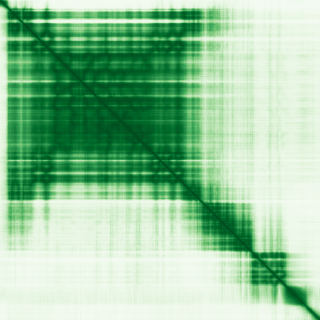
Predicted protein structure

Clinical relevance (Genomics England PanelApp)

Diagnostic Grade (Green)

  • Amelogenesis imperfecta

    BIALLELIC, autosomal or pseudoautosomal
  • Intellectual disability

    BIALLELIC, autosomal or pseudoautosomal

Disease associations (Open Targets)

  • amelogenesis imperfecta

    0.61
  • Hypoplastic amelogenesis imperfecta

    0.60
  • Alopecia-intellectual disability syndrome

    0.39
  • smoking initiation

    0.38
  • hypocalcified amelogenesis imperfecta

    0.37
  • alopecia - intellectual disability syndrome

    0.37
  • non-small cell lung carcinoma

    0.34
  • membranous glomerulonephritis

    0.34
  • adolescent idiopathic scoliosis

    0.33
  • metabolic syndrome

    0.32

Score is the Open Targets composite evidence score (0-1). Higher = stronger gene-disease association.

Protein function (UniProt)

Integrin beta-6

Integrin alpha-V:beta-6 (ITGAV:ITGB6) is a receptor for fibronectin and cytotactin (PubMed:17158881, PubMed:17545607). It recognizes the sequence R-G-D in its ligands (PubMed:17158881, PubMed:17545607). Internalization of integrin alpha-V/beta-6 via clathrin-mediated endocytosis promotes carcinoma cell invasion (PubMed:17158881, PubMed:17545607). ITGAV:ITGB6 acts as a receptor for fibrillin-1 (FBN1) and mediates R-G-D-dependent cell adhesion to FBN1 (PubMed:17158881). Integrin alpha-V:beta-6 (ITGAV:ITGB6) mediates R-G-D-dependent release of transforming growth factor beta-1 (TGF-beta-1) from regulatory Latency-associated peptide (LAP), thereby playing a key role in TGF-beta-1 activation (PubMed:15184403, PubMed:22278742, PubMed:28117447)

Curated MONDO disease pages that list ITGB6 among their top associated genes.

Data sources: HGNC (CC BY 4.0), AlphaFold (CC BY 4.0, Jumper et al. Nature 2021), Genomics England PanelApp (CC BY 4.0), ClinGen, Open Targets (CC0), UniProt.

Not for sole clinical decision-making. Always verify against primary sources.