
AlphaFold predicted structure
ITK · Q08881
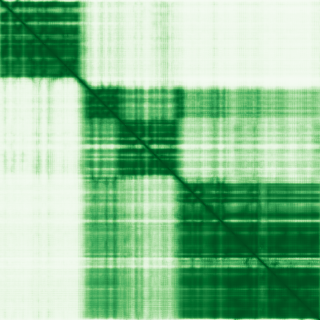
Mean pLDDT
84.5/ 100
Confident
620 residues
Confidence breakdown
- Very high(≥ 90)51%
- Confident(70–90)34%
- Low(50–70)11%
- Very low(< 50)5%
Open interactive 3D viewer
AlphaFold (Jumper et al., 2021) · CC BY 4.0
IL2 inducible T cell kinase
Annotations refreshed 3 months ago.
Diagnostic Grade (Green)
COVID-19 research
BIALLELIC, autosomal or pseudoautosomalHaematological malignancies cancer susceptibility
BIALLELIC, autosomal or pseudoautosomalHaematological malignancies for rare disease
BIALLELIC, autosomal or pseudoautosomalPrimary immunodeficiency or monogenic inflammatory bowel disease
BIALLELIC, autosomal or pseudoautosomallymphoproliferative syndrome 1
renal cell carcinoma
alopecia areata
sarcoma
Hodgkins lymphoma
combined immunodeficiency
severe combined immunodeficiency
soft tissue sarcoma
hypothyroidism
neoplasm
Score is the Open Targets composite evidence score (0-1). Higher = stronger gene-disease association.
Tyrosine-protein kinase ITK/TSK
Tyrosine kinase that plays an essential role in regulation of the adaptive immune response. Regulates the development, function and differentiation of conventional T-cells and nonconventional NKT-cells. When antigen presenting cells (APC) activate T-cell receptor (TCR), a series of phosphorylation lead to the recruitment of ITK to the cell membrane, in the vicinity of the stimulated TCR receptor, where it is phosphorylated by LCK. Phosphorylation leads to ITK autophosphorylation and full activation. Once activated, phosphorylates PLCG1, leading to the activation of this lipase and subsequent cleavage of its substrates. In turn, the endoplasmic reticulum releases calcium in the cytoplasm and the nuclear activator of activated T-cells (NFAT) translocates into the nucleus to perform its transcriptional duty. Phosphorylates 2 essential adapter proteins: the linker for activation of T-cells/LAT protein and LCP2. Then, a large number of signaling molecules such as VAV1 are recruited and ultimately lead to lymphokine production, T-cell proliferation and differentiation (PubMed:12186560, PubMed:12682224, PubMed:21725281). Required for TCR-mediated calcium response in gamma-delta T-cells, may also be involved in the modulation of the transcriptomic signature in the Vgamma2-positive subset of immature gamma-delta T-cells (By similarity). Phosphorylates TBX21 at 'Tyr-530' and mediates its interaction with GATA3 (By similarity)
ITK · Q08881
Mean pLDDT
84.5/ 100
Confident
620 residues
Confidence breakdown
AlphaFold (Jumper et al., 2021) · CC BY 4.0