
AlphaFold predicted structure
IYD · Q6PHW0
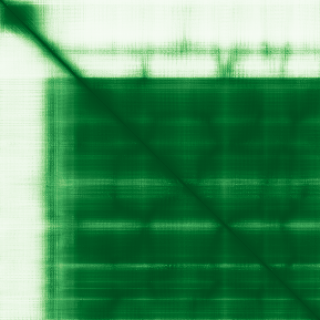
Mean pLDDT
88.1/ 100
Confident
289 residues
Confidence breakdown
- Very high(≥ 90)69%
- Confident(70–90)16%
- Low(50–70)9%
- Very low(< 50)6%
Open interactive 3D viewer
AlphaFold (Jumper et al., 2021) · CC BY 4.0
iodotyrosine deiodinase
Annotations refreshed 2 months ago.
Diagnostic Grade (Green)
Congenital hypothyroidism
BOTH monoallelic and biallelic, autosomal or pseudoautosomalfamilial thyroid dyshormonogenesis
respiratory system disorder
iron metabolism disease
rectosigmoid junction neoplasm
Barrett esophagus
hepatitis B virus infection
esophageal adenocarcinoma
hepatocellular carcinoma
clear cell renal carcinoma
hypothyroidism
Score is the Open Targets composite evidence score (0-1). Higher = stronger gene-disease association.
Iodotyrosine deiodinase 1
Catalyzes the dehalogenation of halotyrosines such as 3-bromo-L-tyrosine, 3-chloro-L-tyrosine, 3-iodo-L-tyrosine and 3,5-diiodo-L-tyrosine (PubMed:15289438, PubMed:18434651, PubMed:25395621, PubMed:28157283). During thyroid hormone biosynthesis, facilitates iodide salvage by catalysing the oxidative NADPH-dependent deiodination of the halogenated by-products of thyroid hormone production, monoiodotyrosine (L-MIT) and diiodotyrosine (L-DIT) (PubMed:15289438, PubMed:18434651). The scavanged iodide can then reenter the hormone-producing pathways (PubMed:15289438, PubMed:18434651). Acts more efficiently on 3-iodo-L-tyrosine than 3,5-diiodo-L-tyrosine (PubMed:15289438)
IYD · Q6PHW0
Mean pLDDT
88.1/ 100
Confident
289 residues
Confidence breakdown
AlphaFold (Jumper et al., 2021) · CC BY 4.0