AlphaFold predicted structure
KAT6B · Q8WYB5
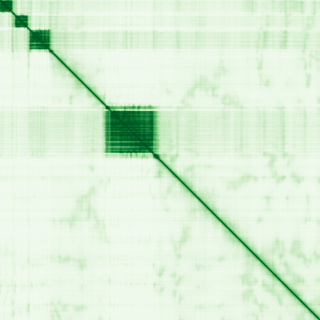
Mean pLDDT
49.0/ 100
Very low
2,073 residues
Confidence breakdown
- Very high(≥ 90)17%
- Confident(70–90)11%
- Low(50–70)3%
- Very low(< 50)70%
AlphaFold (Jumper et al., 2021) · CC BY 4.0
lysine acetyltransferase 6B
Annotations refreshed 10 hours ago.
Diagnostic Grade (Green)
Arthrogryposis
MONOALLELIC, autosomal or pseudoautosomal, NOT imprintedClefting
MONOALLELIC, autosomal or pseudoautosomal, imprinted status unknownDDG2P
MONOALLELIC, autosomal or pseudoautosomal, imprinted status unknownFetal anomalies
MONOALLELIC, autosomal or pseudoautosomal, imprinted status unknownIntellectual disability
MONOALLELIC, autosomal or pseudoautosomal, NOT imprintedRare syndromic craniosynostosis or isolated multisuture synostosis
MONOALLELIC, autosomal or pseudoautosomal, NOT imprintedSkeletal dysplasia
MONOALLELIC, autosomal or pseudoautosomal, imprinted status unknownStructural eye disease
MONOALLELIC, autosomal or pseudoautosomal, NOT imprintedgenitopatellar syndrome
blepharophimosis - intellectual disability syndrome, SBBYS type
Blepharophimosis-intellectual disability syndrome, SBBYS type
KAT6B-related multiple congenital anomalies syndrome
hereditary disease
Intellectual disability
neurodevelopmental disorder
prostate adenocarcinoma
colorectal adenocarcinoma
esophageal adenocarcinoma
Score is the Open Targets composite evidence score (0-1). Higher = stronger gene-disease association.
Histone acetyltransferase KAT6B
Histone acetyltransferase which may be involved in both positive and negative regulation of transcription. Required for RUNX2-dependent transcriptional activation. May be involved in cerebral cortex development. Component of the MOZ/MORF complex which has a histone H3 acetyltransferase activity
KAT6B · Q8WYB5

Mean pLDDT
49.0/ 100
Very low
2,073 residues
Confidence breakdown
AlphaFold (Jumper et al., 2021) · CC BY 4.0