Skip to content
GenoLensGenoLens

KCNA5

Chr 12p13.32

potassium voltage-gated channel subfamily A member 5

Aliases:
Kv1.5, HK2, HPCN1
MANE:
ENST00000252321.5

Annotations refreshed 1 month ago.

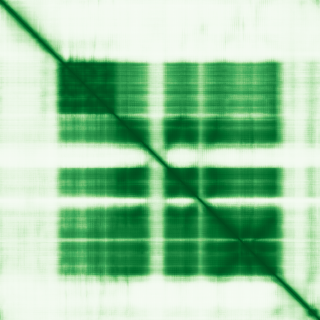
Predicted protein structure

Clinical relevance (Genomics England PanelApp)

Moderate Evidence (Amber)

  • Primary immunodeficiency or monogenic inflammatory bowel disease

    BIALLELIC, autosomal or pseudoautosomal
  • Familial Meniere Disease

  • Pulmonary arterial hypertension

    Unknown

Disease associations (Open Targets)

  • familial atrial fibrillation

    0.62
  • multiple sclerosis

    0.59
  • Lambert-Eaton myasthenic syndrome

    0.56
  • myasthenia gravis

    0.56
  • atrial fibrillation

    0.53
  • cardiac arrhythmia

    0.50
  • congenital myasthenic syndrome

    0.49
  • Congenital myasthenic syndromes

    0.49
  • Muscle weakness

    0.46
  • neoplasm

    0.38

Score is the Open Targets composite evidence score (0-1). Higher = stronger gene-disease association.

Protein function (UniProt)

Potassium voltage-gated channel subfamily A member 5

Voltage-gated potassium channel that mediates transmembrane potassium transport in excitable membranes. Forms tetrameric potassium-selective channels through which potassium ions pass in accordance with their electrochemical gradient. The channel alternates between opened and closed conformations in response to the voltage difference across the membrane. Can form functional homotetrameric channels and heterotetrameric channels that contain variable proportions of KCNA1, KCNA2, KCNA4, KCNA5, and possibly other family members as well; channel properties depend on the type of alpha subunits that are part of the channel (PubMed:12130714). Channel properties are modulated by cytoplasmic beta subunits that regulate the subcellular location of the alpha subunits and promote rapid inactivation (PubMed:12130714). Homotetrameric channels display rapid activation and slow inactivation (PubMed:12130714, PubMed:8505626). Required for normal electrical conduction including formation of the infranodal ventricular conduction system and normal action potential configuration, as a result of its interaction with XIRP2 (By similarity). May play a role in regulating the secretion of insulin in normal pancreatic islets

Data sources: HGNC (CC BY 4.0), AlphaFold (CC BY 4.0, Jumper et al. Nature 2021), Genomics England PanelApp (CC BY 4.0), ClinGen, Open Targets (CC0), UniProt.

Not for sole clinical decision-making. Always verify against primary sources.