
AlphaFold predicted structure
KCNB2 · Q92953
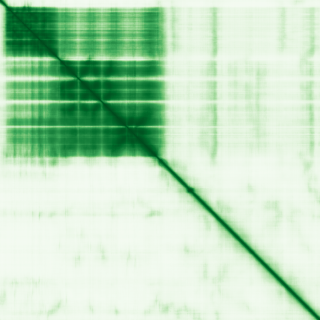
Mean pLDDT
60.5/ 100
Low
911 residues
Confidence breakdown
- Very high(≥ 90)28%
- Confident(70–90)16%
- Low(50–70)6%
- Very low(< 50)50%
Open interactive 3D viewer
AlphaFold (Jumper et al., 2021) · CC BY 4.0
potassium voltage-gated channel subfamily B member 2
Annotations refreshed 2 months ago.
Diagnostic Grade (Green)
DDG2P
MONOALLELIC, autosomal or pseudoautosomal, imprinted status unknownIntellectual disability
MONOALLELIC, autosomal or pseudoautosomal, NOT imprintedEarly onset or syndromic epilepsy
MONOALLELIC, autosomal or pseudoautosomal, NOT imprintedmultiple sclerosis
Lambert-Eaton myasthenic syndrome
myasthenia gravis
congenital myasthenic syndrome
Congenital myasthenic syndromes
neurodevelopmental disorder
Muscle weakness
smoking initiation
neoplasm
cancer
Score is the Open Targets composite evidence score (0-1). Higher = stronger gene-disease association.
Potassium voltage-gated channel subfamily B member 2
Voltage-gated potassium channel that mediates transmembrane potassium transport in excitable membranes, primarily in the brain and smooth muscle cells. Channels open or close in response to the voltage difference across the membrane, letting potassium ions pass in accordance with their electrochemical gradient. Homotetrameric channels mediate a delayed-rectifier voltage-dependent outward potassium current that display rapid activation and slow inactivation in response to membrane depolarization. Can form functional homotetrameric and heterotetrameric channels that contain variable proportions of KCNB1; channel properties depend on the type of alpha subunits that are part of the channel. Can also form functional heterotetrameric channels with other alpha subunits that are non-conducting when expressed alone, such as KCNS1 and KCNS2, creating a functionally diverse range of channel complexes. In vivo, membranes probably contain a mixture of heteromeric potassium channel complexes, making it difficult to assign currents observed in intact tissues to any particular potassium channel family member. Contributes to the delayed-rectifier voltage-gated potassium current in cortical pyramidal neurons and smooth muscle cells
KCNB2 · Q92953
Mean pLDDT
60.5/ 100
Low
911 residues
Confidence breakdown
AlphaFold (Jumper et al., 2021) · CC BY 4.0