Skip to content
GenoLensGenoLens

KCNC1

Chr 11p15.1

potassium voltage-gated channel subfamily C member 1

Aliases:
Kv3.1
MANE:
ENST00000265969.8

Annotations refreshed 10 hours ago.

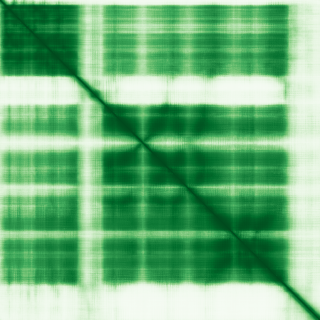
Predicted protein structure

Clinical relevance (Genomics England PanelApp)

Diagnostic Grade (Green)

  • DDG2P

    MONOALLELIC, autosomal or pseudoautosomal, imprinted status unknown
  • Early onset or syndromic epilepsy

    MONOALLELIC, autosomal or pseudoautosomal, imprinted status unknown
  • Intellectual disability

    MONOALLELIC, autosomal or pseudoautosomal, NOT imprinted
  • Fetal anomalies

    MONOALLELIC, autosomal or pseudoautosomal, imprinted status unknown

Disease associations (Open Targets)

  • Progressive myoclonic epilepsy

    0.77
  • multiple sclerosis

    0.59
  • Lambert-Eaton myasthenic syndrome

    0.56
  • myasthenia gravis

    0.56
  • congenital myasthenic syndrome

    0.49
  • Congenital myasthenic syndromes

    0.49
  • hereditary disease

    0.47
  • progressive myoclonus epilepsy

    0.46
  • Muscle weakness

    0.46
  • neurodegenerative disease

    0.41

Score is the Open Targets composite evidence score (0-1). Higher = stronger gene-disease association.

Protein function (UniProt)

Voltage-gated potassium channel KCNC1

Voltage-gated potassium channel that opens in response to the voltage difference across the membrane and through which potassium ions pass in accordance with their electrochemical gradient (PubMed:25401298, PubMed:35840580). The mechanism is time-dependent and inactivation is slow (By similarity). Plays an important role in the rapid repolarization of fast-firing brain neurons (By similarity). Can form functional homotetrameric channels and heterotetrameric channels that contain variable proportions of KCNC2, and possibly other family members as well (By similarity). Contributes to fire sustained trains of very brief action potentials at high frequency in pallidal neurons (By similarity)

Data sources: HGNC (CC BY 4.0), AlphaFold (CC BY 4.0, Jumper et al. Nature 2021), Genomics England PanelApp (CC BY 4.0), ClinGen, Open Targets (CC0), UniProt.

Not for sole clinical decision-making. Always verify against primary sources.