
AlphaFold predicted structure
KCNC3 · Q14003
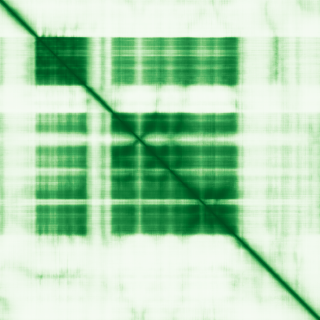
Mean pLDDT
64.1/ 100
Low
757 residues
Confidence breakdown
- Very high(≥ 90)25%
- Confident(70–90)26%
- Low(50–70)6%
- Very low(< 50)43%
Open interactive 3D viewer
AlphaFold (Jumper et al., 2021) · CC BY 4.0
potassium voltage-gated channel subfamily C member 3
Annotations refreshed 2 months ago.
Diagnostic Grade (Green)
Adult onset neurodegenerative disorder
MONOALLELIC, autosomal or pseudoautosomal, imprinted status unknownAtaxia and cerebellar anomalies - narrow panel
MONOALLELIC, autosomal or pseudoautosomal, NOT imprintedCerebellar hypoplasia
MONOALLELIC, autosomal or pseudoautosomal, NOT imprintedDDG2P
MONOALLELIC, autosomal or pseudoautosomal, imprinted status unknownFetal anomalies
MONOALLELIC, autosomal or pseudoautosomal, NOT imprintedHereditary ataxia
MONOALLELIC, autosomal or pseudoautosomal, imprinted status unknownHereditary ataxia with onset in adulthood
MONOALLELIC, autosomal or pseudoautosomal, imprinted status unknownChildhood onset dystonia, chorea or related movement disorder
MONOALLELIC, autosomal or pseudoautosomal, imprinted status unknown+3 more panels — install the extension to see the full list inline on any page.
spinocerebellar ataxia type 13
multiple sclerosis
Lambert-Eaton myasthenic syndrome
myasthenia gravis
congenital myasthenic syndrome
Congenital myasthenic syndromes
Muscle weakness
cerebellar ataxia
neurodegenerative disease
hereditary disease
Score is the Open Targets composite evidence score (0-1). Higher = stronger gene-disease association.
Voltage-gated potassium channel KCNC3
Voltage-gated potassium channel that plays an important role in the rapid repolarization of fast-firing brain neurons. The channel opens in response to the voltage difference across the membrane, forming a potassium-selective channel through which potassium ions pass in accordance with their electrochemical gradient. The channel displays rapid activation and inactivation kinetics (PubMed:10712820, PubMed:16501573, PubMed:19953606, PubMed:21479265, PubMed:22289912, PubMed:23734863, PubMed:25756792, PubMed:26997484). It plays a role in the regulation of the frequency, shape and duration of action potentials in Purkinje cells. Required for normal survival of cerebellar neurons, probably via its role in regulating the duration and frequency of action potentials that in turn regulate the activity of voltage-gated Ca(2+) channels and cellular Ca(2+) homeostasis (By similarity). Required for normal motor function (PubMed:16501573, PubMed:19953606, PubMed:21479265, PubMed:23734863, PubMed:25756792). Plays a role in the reorganization of the cortical actin cytoskeleton and the formation of actin veil structures in neuronal growth cones via its interaction with HAX1 and the Arp2/3 complex (PubMed:26997484)
KCNC3 · Q14003
Mean pLDDT
64.1/ 100
Low
757 residues
Confidence breakdown
AlphaFold (Jumper et al., 2021) · CC BY 4.0