
AlphaFold predicted structure
KCNH2 · Q12809
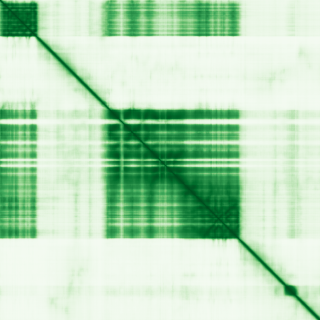
Mean pLDDT
62.8/ 100
Low
1,159 residues
Confidence breakdown
- Very high(≥ 90)27%
- Confident(70–90)23%
- Low(50–70)5%
- Very low(< 50)45%
Open interactive 3D viewer
AlphaFold (Jumper et al., 2021) · CC BY 4.0
potassium voltage-gated channel subfamily H member 2
Annotations refreshed 2 months ago.
Diagnostic Grade (Green)
Long QT syndrome
MONOALLELIC, autosomal or pseudoautosomal, NOT imprintedShort QT syndrome
MONOALLELIC, autosomal or pseudoautosomal, NOT imprintedFetal anomalies
MONOALLELIC, autosomal or pseudoautosomal, NOT imprintedBrugada syndrome and cardiac sodium channel disease
MONOALLELIC, autosomal or pseudoautosomal, NOT imprintedFetal hydrops
MONOALLELIC, autosomal or pseudoautosomal, NOT imprintedRomano-Ward syndrome
Familial short QT syndrome
atrial fibrillation
cardiac arrhythmia
Prolonged QT interval
familial long QT syndrome
ventricular fibrillation
ventricular tachycardia
atrial flutter
multiple sclerosis
Score is the Open Targets composite evidence score (0-1). Higher = stronger gene-disease association.
Voltage-gated inwardly rectifying potassium channel KCNH2
Pore-forming (alpha) subunit of voltage-gated inwardly rectifying potassium channel (PubMed:10219239, PubMed:10753933, PubMed:10790218, PubMed:10837251, PubMed:11997281, PubMed:12063277, PubMed:18559421, PubMed:22314138, PubMed:22359612, PubMed:26363003, PubMed:27916661, PubMed:9230439, PubMed:9351446, PubMed:9765245). Channel properties are modulated by cAMP and subunit assembly (PubMed:10837251). Characterized by unusual gating kinetics by producing relatively small outward currents during membrane depolarization and large inward currents during subsequent repolarization which reflect a rapid inactivation during depolarization and quick recovery from inactivation but slow deactivation (closing) during repolarization (PubMed:10219239, PubMed:10753933, PubMed:10790218, PubMed:10837251, PubMed:11997281, PubMed:12063277, PubMed:18559421, PubMed:22314138, PubMed:22359612, PubMed:26363003, PubMed:27916661, PubMed:9230439, PubMed:9351446, PubMed:9765245). Forms a stable complex with KCNE1 or KCNE2, and that this heteromultimerization regulates inward rectifier potassium channel activity (PubMed:10219239, PubMed:9230439)
Curated MONDO disease pages that list KCNH2 among their top associated genes.
KCNH2 · Q12809
Mean pLDDT
62.8/ 100
Low
1,159 residues
Confidence breakdown
AlphaFold (Jumper et al., 2021) · CC BY 4.0