Skip to content
GenoLensGenoLens

KCNH5

Chr 14q23.2

potassium voltage-gated channel subfamily H member 5

Aliases:
Kv10.2, H-EAG2, eag2, hEAG2
MANE:
ENST00000322893.12

Annotations refreshed 1 month ago.

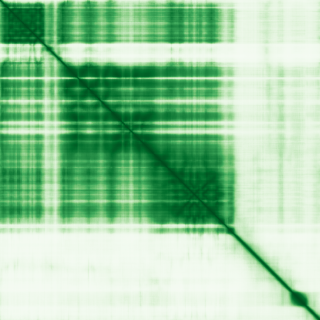
Predicted protein structure

Clinical relevance (Genomics England PanelApp)

Diagnostic Grade (Green)

  • DDG2P

    MONOALLELIC, autosomal or pseudoautosomal, imprinted status unknown
  • Early onset or syndromic epilepsy

    MONOALLELIC, autosomal or pseudoautosomal, NOT imprinted
  • Intellectual disability

    MONOALLELIC, autosomal or pseudoautosomal, NOT imprinted

Disease associations (Open Targets)

  • developmental and epileptic encephalopathy 112

    0.67
  • myasthenia gravis

    0.61
  • multiple sclerosis

    0.59
  • Lambert-Eaton myasthenic syndrome

    0.56
  • genetic developmental and epileptic encephalopathy

    0.51
  • early-infantile DEE

    0.51
  • developmental and epileptic encephalopathy, 12

    0.50
  • congenital myasthenic syndrome

    0.49
  • Congenital myasthenic syndromes

    0.49
  • Muscle weakness

    0.46

Score is the Open Targets composite evidence score (0-1). Higher = stronger gene-disease association.

Protein function (UniProt)

Voltage-gated delayed rectifier potassium channel KCNH5

Pore-forming (alpha) subunit of a voltage-gated delayed rectifier potassium channel that mediates outward-rectifying potassium currents which, on depolarization, reaches a steady-state level and do not inactivate (PubMed:11943152, PubMed:12135768, PubMed:24133262, PubMed:36928654). The kinetic is characterized by a slow activation time course and a small voltage dependence of the activation time constants, therefore, starts to open at more negative voltages (PubMed:11943152, PubMed:12135768). The activation kinetics depend on the prepulse potential and external divalent cation concentration (PubMed:11943152, PubMed:24133262). The time course of activation is biphasic with a fast and a slowly activating current component (PubMed:11943152, PubMed:12135768, PubMed:36928654). With negative prepulses, the current activation is delayed and slowed down several fold, whereas more positive prepulses speed up activation, therefore the activation rate depends on holding potential (PubMed:11943152, PubMed:12135768, PubMed:36928654)

Curated MONDO disease pages that list KCNH5 among their top associated genes.

Data sources: HGNC (CC BY 4.0), AlphaFold (CC BY 4.0, Jumper et al. Nature 2021), Genomics England PanelApp (CC BY 4.0), ClinGen, Open Targets (CC0), UniProt.

Not for sole clinical decision-making. Always verify against primary sources.