Skip to content
GenoLensGenoLens

KCNJ10

Chr 1q23.2

potassium inwardly rectifying channel subfamily J member 10

Aliases:
Kir4.1, Kir1.2
MANE:
ENST00000644903.1

Annotations refreshed 1 month ago.

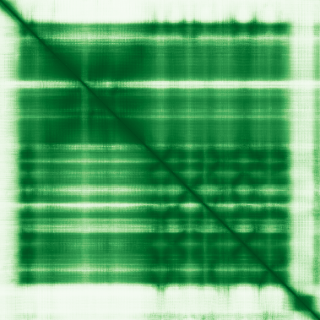
Predicted protein structure

Clinical relevance (Genomics England PanelApp)

Diagnostic Grade (Green)

  • Ataxia and cerebellar anomalies - narrow panel

    BIALLELIC, autosomal or pseudoautosomal
  • DDG2P

    BIALLELIC, autosomal or pseudoautosomal
  • Early onset or syndromic epilepsy

    BIALLELIC, autosomal or pseudoautosomal
  • Hereditary ataxia

    BIALLELIC, autosomal or pseudoautosomal
  • Hereditary ataxia with onset in adulthood

    BIALLELIC, autosomal or pseudoautosomal
  • Intellectual disability

    BIALLELIC, autosomal or pseudoautosomal
  • Monogenic hearing loss

    BIALLELIC, autosomal or pseudoautosomal
  • Renal tubulopathies

    BIALLELIC, autosomal or pseudoautosomal

+4 more panels — install the extension to see the full list inline on any page.

Disease associations (Open Targets)

  • EAST syndrome

    0.84
  • autosomal recessive nonsyndromic hearing loss 4

    0.63
  • Pendred syndrome

    0.59
  • episodic kinesigenic dyskinesia

    0.45
  • hypercoagulability syndrome due to glycosylphosphatidylinositol deficiency

    0.41
  • episodic kinesigenic dyskinesia 1

    0.39
  • hereditary disease

    0.38
  • nonsyndromic genetic hearing loss

    0.37
  • cerebellar ataxia

    0.35
  • Sensorineural hearing impairment

    0.33

Score is the Open Targets composite evidence score (0-1). Higher = stronger gene-disease association.

Protein function (UniProt)

ATP-sensitive inward rectifier potassium channel 10

May be responsible for potassium buffering action of glial cells in the brain (By similarity). Inward rectifier potassium channels are characterized by a greater tendency to allow potassium to flow into the cell rather than out of it (PubMed:8995301). Their voltage dependence is regulated by the concentration of extracellular potassium; as external potassium is raised, the voltage range of the channel opening shifts to more positive voltages (PubMed:8995301). The inward rectification is mainly due to the blockage of outward current by internal magnesium. Can be blocked by extracellular barium and cesium (PubMed:8995301). In the kidney, together with KCNJ16, mediates basolateral K(+) recycling in distal tubules; this process is critical for Na(+) reabsorption at the tubules (PubMed:24561201)

Data sources: HGNC (CC BY 4.0), AlphaFold (CC BY 4.0, Jumper et al. Nature 2021), Genomics England PanelApp (CC BY 4.0), ClinGen, Open Targets (CC0), UniProt.

Not for sole clinical decision-making. Always verify against primary sources.