AlphaFold predicted structure
KCNJ13 · O60928
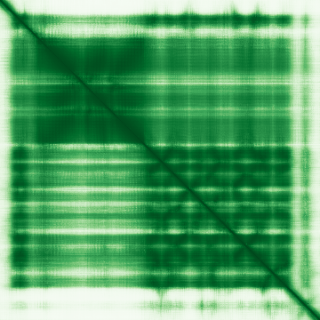
Mean pLDDT
83.0/ 100
Confident
360 residues
Confidence breakdown
- Very high(≥ 90)56%
- Confident(70–90)27%
- Low(50–70)6%
- Very low(< 50)12%
AlphaFold (Jumper et al., 2021) · CC BY 4.0
potassium inwardly rectifying channel subfamily J member 13
Annotations refreshed 1 month ago.
Diagnostic Grade (Green)
Retinal disorders
BOTH monoallelic and biallelic, autosomal or pseudoautosomalGlaucoma (developmental)
Ophthalmological ciliopathies
Primary ciliary disorders
Rare multisystem ciliopathy disorders
Skeletal dysplasia
Structural eye disease
BOTH monoallelic and biallelic, autosomal or pseudoautosomalThoracic dystrophies
Leber congenital amaurosis 16
Leber congenital amaurosis
snowflake vitreoretinal degeneration
eye disorder
inherited retinal dystrophy
retinitis pigmentosa
coronary artery disorder
major depressive disorder
epistaxis
Retinal dystrophy
Score is the Open Targets composite evidence score (0-1). Higher = stronger gene-disease association.
Inward rectifier potassium channel 13
Inward rectifier potassium channels are characterized by a greater tendency to allow potassium to flow into the cell rather than out of it. Their voltage dependence is regulated by the concentration of extracellular potassium; as external potassium is raised, the voltage range of the channel opening shifts to more positive voltages. The inward rectification is mainly due to the blockage of outward current by internal magnesium. KCNJ13 has a very low single channel conductance, low sensitivity to block by external barium and cesium, and no dependence of its inward rectification properties on the internal blocking particle magnesium
KCNJ13 · O60928

Mean pLDDT
83.0/ 100
Confident
360 residues
Confidence breakdown
AlphaFold (Jumper et al., 2021) · CC BY 4.0