AlphaFold predicted structure
KCNJ16 · Q9NPI9
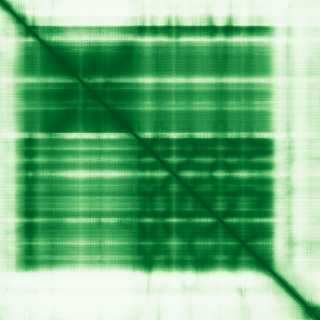
Mean pLDDT
78.1/ 100
Confident
418 residues
Confidence breakdown
- Very high(≥ 90)49%
- Confident(70–90)24%
- Low(50–70)10%
- Very low(< 50)17%
AlphaFold (Jumper et al., 2021) · CC BY 4.0
potassium inwardly rectifying channel subfamily J member 16
Annotations refreshed 1 month ago.
Diagnostic Grade (Green)
Monogenic hearing loss
BIALLELIC, autosomal or pseudoautosomalRenal tubulopathies
BIALLELIC, autosomal or pseudoautosomalhypokalemic tubulopathy and deafness
Abnormality of the skeletal system
facial morphology
Sjogren syndrome
bipolar disorder
Snoring
poisoning
epilepsy
auditory system disorder
breast disorder
Score is the Open Targets composite evidence score (0-1). Higher = stronger gene-disease association.
Inward rectifier potassium channel 16
Inward rectifier potassium channels are characterized by a greater tendency to allow potassium to flow into the cell rather than out of it. Their voltage dependence is regulated by the concentration of extracellular potassium; as external potassium is raised, the voltage range of the channel opening shifts to more positive voltages. The inward rectification is mainly due to the blockage of outward current by internal magnesium. KCNJ16 may be involved in the regulation of fluid and pH balance. In the kidney, together with KCNJ10, mediates basolateral K(+) recycling in distal tubules; this process is critical for Na(+) reabsorption at the tubules (PubMed:24561201)
KCNJ16 · Q9NPI9

Mean pLDDT
78.1/ 100
Confident
418 residues
Confidence breakdown
AlphaFold (Jumper et al., 2021) · CC BY 4.0