Skip to content
GenoLensGenoLens

KCNJ2

Chr 17q24.3

potassium inwardly rectifying channel subfamily J member 2

Aliases:
Kir2.1, IRK1, LQT7
MANE:
ENST00000243457.4

Annotations refreshed 10 hours ago.

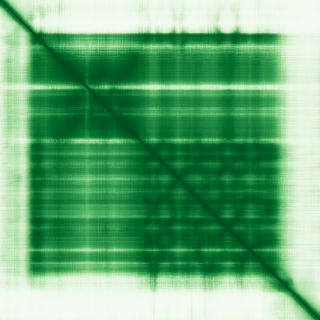
Predicted protein structure

Clinical relevance (Genomics England PanelApp)

Diagnostic Grade (Green)

  • Brain channelopathy

    MONOALLELIC, autosomal or pseudoautosomal, NOT imprinted
  • Clefting

    MONOALLELIC, autosomal or pseudoautosomal, imprinted status unknown
  • Fetal anomalies

    MONOALLELIC, autosomal or pseudoautosomal, imprinted status unknown
  • Long QT syndrome

    MONOALLELIC, autosomal or pseudoautosomal, NOT imprinted
  • Short QT syndrome

    MONOALLELIC, autosomal or pseudoautosomal, NOT imprinted
  • Skeletal Muscle Channelopathies

    MONOALLELIC, autosomal or pseudoautosomal, NOT imprinted
  • Skeletal muscle channelopathy

    MONOALLELIC, autosomal or pseudoautosomal, imprinted status unknown
  • Catecholaminergic polymorphic VT

    MONOALLELIC, autosomal or pseudoautosomal, NOT imprinted

+2 more panels — install the extension to see the full list inline on any page.

Disease associations (Open Targets)

  • Andersen-Tawil syndrome

    0.84
  • Cardiodysrhythmic potassium-sensitive periodic paralysis

    0.77
  • short QT syndrome type 3

    0.71
  • Familial short QT syndrome

    0.70
  • atrial fibrillation, familial, 9

    0.69
  • atrial fibrillation

    0.66
  • Abnormality of the cardiovascular system

    0.53
  • cardiac arrhythmia

    0.52
  • periodic paralysis

    0.51
  • Varicose veins

    0.40

Score is the Open Targets composite evidence score (0-1). Higher = stronger gene-disease association.

Protein function (UniProt)

Inward rectifier potassium channel 2

Inward rectifier potassium channels are characterized by a greater tendency to allow potassium to flow into the cell rather than out of it (PubMed:36149965, PubMed:7590287, PubMed:9490857). Their voltage dependence is regulated by the concentration of extracellular potassium; as external potassium is raised, the voltage range of the channel opening shifts to more positive voltages (PubMed:7590287, PubMed:7696590). The inward rectification is mainly due to the blockage of outward current by internal magnesium (PubMed:9490857). Can be blocked by extracellular barium or cesium (PubMed:7590287, PubMed:7696590). Probably participates in establishing action potential waveform and excitability of neuronal and muscle tissues (PubMed:7590287, PubMed:7696590, PubMed:7840300)

Curated MONDO disease pages that list KCNJ2 among their top associated genes.

Data sources: HGNC (CC BY 4.0), AlphaFold (CC BY 4.0, Jumper et al. Nature 2021), Genomics England PanelApp (CC BY 4.0), ClinGen, Open Targets (CC0), UniProt.

Not for sole clinical decision-making. Always verify against primary sources.