Skip to content
GenoLensGenoLens

KCNJ4

Chr 22q13.1

potassium inwardly rectifying channel subfamily J member 4

Aliases:
Kir2.3, HIR, HRK1, hIRK2, IRK3
MANE:
ENST00000303592.3

Annotations refreshed 9 hours ago.

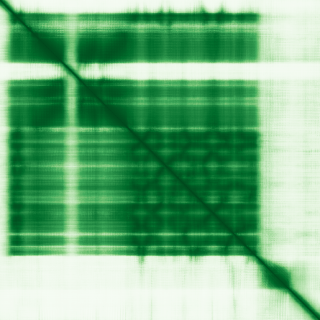
Predicted protein structure

Clinical relevance (Genomics England PanelApp)

Moderate Evidence (Amber)

  • Early onset or syndromic epilepsy

    MONOALLELIC, autosomal or pseudoautosomal, NOT imprinted

Disease associations (Open Targets)

  • neurodegenerative disease

    0.28
  • mathematical ability

    0.27
  • stomach disorder

    0.26
  • prostate cancer

    0.11
  • Familial prostate cancer

    0.11
  • monoclonal gammopathy

    0.05
  • glioblastoma

    0.04
  • central nervous system cancer

    0.04
  • astrocytoma (excluding glioblastoma)

    0.02
  • oligodendroglioma

    0.02

Score is the Open Targets composite evidence score (0-1). Higher = stronger gene-disease association.

Protein function (UniProt)

Inward rectifier potassium channel 4

Inward rectifier potassium channels are characterized by a greater tendency to allow potassium to flow into the cell rather than out of it. Their voltage dependence is regulated by the concentration of extracellular potassium; as external potassium is raised, the voltage range of the channel opening shifts to more positive voltages. The inward rectification is mainly due to the blockage of outward current by internal magnesium. Can be blocked by extracellular barium and cesium

Data sources: HGNC (CC BY 4.0), AlphaFold (CC BY 4.0, Jumper et al. Nature 2021), Genomics England PanelApp (CC BY 4.0), ClinGen, Open Targets (CC0), UniProt.

Not for sole clinical decision-making. Always verify against primary sources.