AlphaFold predicted structure
KCNJ5 · P48544
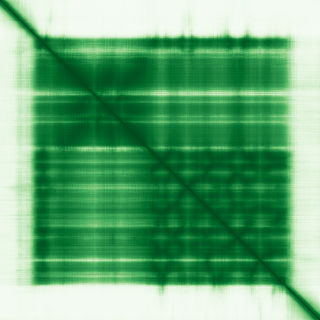
Mean pLDDT
81.3/ 100
Confident
419 residues
Confidence breakdown
- Very high(≥ 90)66%
- Confident(70–90)11%
- Low(50–70)2%
- Very low(< 50)21%
AlphaFold (Jumper et al., 2021) · CC BY 4.0
potassium inwardly rectifying channel subfamily J member 5
Annotations refreshed 10 hours ago.
Diagnostic Grade (Green)
Extreme early-onset hypertension
MONOALLELIC, autosomal or pseudoautosomal, NOT imprintedPrimary hyperaldosteronism - KCNJ5
MONOALLELIC, autosomal or pseudoautosomal, imprinted status unknownSkeletal Muscle Channelopathies
MONOALLELIC, autosomal or pseudoautosomal, NOT imprintedLong QT syndrome
MONOALLELIC, autosomal or pseudoautosomal, NOT imprintedParoxysmal central nervous system disorders
MONOALLELIC, autosomal or pseudoautosomal, imprinted status unknownShort QT syndrome
MONOALLELIC, autosomal or pseudoautosomal, NOT imprintedfamilial hyperaldosteronism type III
atrial fibrillation
aldosterone-producing adrenal cortex adenoma
Prolonged QT interval
long QT syndrome 13
cardiac arrhythmia
atrial flutter
Abnormality of the cardiovascular system
Romano-Ward syndrome
familial atrial fibrillation
Score is the Open Targets composite evidence score (0-1). Higher = stronger gene-disease association.
G protein-activated inward rectifier potassium channel 4
Inward rectifier potassium channels are characterized by a greater tendency to allow potassium to flow into the cell rather than out of it. Their voltage dependence is regulated by the concentration of extracellular potassium; as external potassium is raised, the voltage range of the channel opening shifts to more positive voltages. The inward rectification is mainly due to the blockage of outward current by internal magnesium. Can be blocked by external barium. This potassium channel is controlled by G proteins
Curated MONDO disease pages that list KCNJ5 among their top associated genes.
KCNJ5 · P48544

Mean pLDDT
81.3/ 100
Confident
419 residues
Confidence breakdown
AlphaFold (Jumper et al., 2021) · CC BY 4.0