
AlphaFold predicted structure
KCNJ6 · P48051
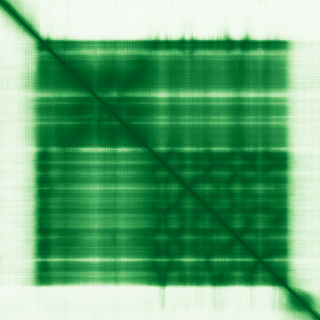
Mean pLDDT
83.7/ 100
Confident
423 residues
Confidence breakdown
- Very high(≥ 90)70%
- Confident(70–90)9%
- Low(50–70)7%
- Very low(< 50)14%
Open interactive 3D viewer
AlphaFold (Jumper et al., 2021) · CC BY 4.0
potassium inwardly rectifying channel subfamily J member 6
Annotations refreshed 2 months ago.
Diagnostic Grade (Green)
DDG2P
MONOALLELIC, autosomal or pseudoautosomal, imprinted status unknownIntellectual disability
MONOALLELIC, autosomal or pseudoautosomal, imprinted status unknownSevere insulin resistance and lipodystrophy syndromes
MONOALLELIC, autosomal or pseudoautosomal, NOT imprintedFetal anomalies
MONOALLELIC, autosomal or pseudoautosomal, NOT imprintedKeppen-Lubinsky syndrome
mathematical ability
intelligence
alcohol drinking
cervical carcinoma
placental abruption
autism spectrum disorder
risk-taking behaviour
lymphatic system disorder
esophageal ulcer
Score is the Open Targets composite evidence score (0-1). Higher = stronger gene-disease association.
G protein-activated inward rectifier potassium channel 2
Inward rectifier potassium channels are characterized by a greater tendency to allow potassium to flow into the cell rather than out of it. Their voltage dependence is regulated by the concentration of extracellular potassium; as external potassium is raised, the voltage range of the channel opening shifts to more positive voltages. The inward rectification is mainly due to the blockage of outward current by internal magnesium. This potassium channel may be involved in the regulation of insulin secretion by glucose and/or neurotransmitters acting through G protein-coupled receptors
KCNJ6 · P48051
Mean pLDDT
83.7/ 100
Confident
423 residues
Confidence breakdown
AlphaFold (Jumper et al., 2021) · CC BY 4.0