
AlphaFold predicted structure
KCNK18 · Q7Z418
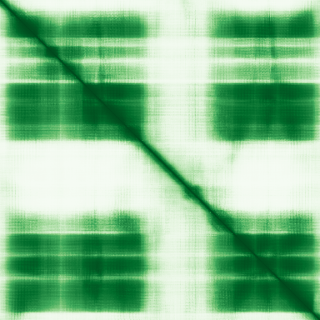
Mean pLDDT
69.8/ 100
Low
384 residues
Confidence breakdown
- Very high(≥ 90)24%
- Confident(70–90)34%
- Low(50–70)18%
- Very low(< 50)25%
Open interactive 3D viewer
AlphaFold (Jumper et al., 2021) · CC BY 4.0
potassium two pore domain channel subfamily K member 18
Annotations refreshed 3 months ago.
Moderate Evidence (Amber)
Brain channelopathy
Paroxysmal central nervous system disorders
MONOALLELIC, autosomal or pseudoautosomal, imprinted status unknownAdult onset dystonia, chorea or related movement disorder
Adult onset neurodegenerative disorder
UnknownChildhood onset dystonia, chorea or related movement disorder
UnknownHereditary ataxia with onset in adulthood
MONOALLELIC, autosomal or pseudoautosomal, NOT imprintedmigraine disorder
sedation
acute respiratory distress syndrome
delirium
mitral valve disorder
aortic valve disorder
myocardial infarction
colorectal cancer
neurodevelopmental disorder
Inguinal hernia
Score is the Open Targets composite evidence score (0-1). Higher = stronger gene-disease association.
Potassium channel subfamily K member 18
K(+) channel that conducts outward and inward rectifying currents at depolarized and hyperpolarized membrane potentials, respectively. The outward rectifying currents are voltage-dependent, coupled to K(+) electrochemical gradient across the membrane, whereas the inward currents can be induced in response to activation of Ca(2+)-mobilizing receptors (PubMed:12754259, PubMed:15562060, PubMed:20871611, PubMed:22355750, PubMed:26919430, PubMed:30573346). Homo- and heterodimerizes to form functional channels with distinct regulatory and gating properties. In trigeminal ganglia sensory neurons, the heterodimers of KCNK18/TRESK and KCNK2/TREK-1 or KCNK10/TREK-2 inhibit neuronal firing and neurogenic inflammation by stabilizing the resting membrane potential at K(+) equilibrium potential as well as by regulating the threshold of action potentials and the spike frequency (By similarity). In thymocytes, conducts K(+) currents upon T cell receptor (TCR) signaling leading to sustained Ca(2+) influx and NF-kappa-B activation, FOXP3 transcription and positive selection of regulatory T cell (Treg) progenitor subsets (PubMed:34702947). Appears to mediate the analgesics effects of hydroxy-alpha-sanshool, a metabolite naturally present in Schezuan pepper and other Xanthoxylum plants (By similarity)
KCNK18 · Q7Z418
Mean pLDDT
69.8/ 100
Low
384 residues
Confidence breakdown
AlphaFold (Jumper et al., 2021) · CC BY 4.0