Skip to content
GenoLensGenoLens

KCNK4

Chr 11q13.1

potassium two pore domain channel subfamily K member 4

Aliases:
K2p4.1, TRAAK
MANE:
ENST00000422670.7

Annotations refreshed 1 month ago.

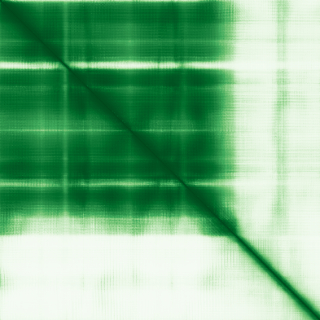
Predicted protein structure

Clinical relevance (Genomics England PanelApp)

Diagnostic Grade (Green)

  • Early onset or syndromic epilepsy

    MONOALLELIC, autosomal or pseudoautosomal, imprinted status unknown
  • Intellectual disability

    MONOALLELIC, autosomal or pseudoautosomal, imprinted status unknown
  • DDG2P

    MONOALLELIC, autosomal or pseudoautosomal, imprinted status unknown

Disease associations (Open Targets)

  • facial dysmorphism, hypertrichosis, epilepsy, intellectual/developmental delay, and gingival overgrowth syndrome

    0.65
  • gingival overgrowth

    0.52
  • Intellectual disability

    0.52
  • Seizure

    0.52
  • Generalized hypertrichosis

    0.43
  • Abnormal facial shape

    0.43
  • hypertrichosis

    0.37
  • Neurodevelopmental delay

    0.37
  • Rolandic epilepsy

    0.27
  • epilepsy

    0.03

Score is the Open Targets composite evidence score (0-1). Higher = stronger gene-disease association.

Protein function (UniProt)

Potassium channel subfamily K member 4

K(+) channel that conducts voltage-dependent outward rectifying currents upon membrane depolarization. Voltage sensing is coupled to K(+) electrochemical gradient in an 'ion flux gating' mode where outward but not inward ion flow opens the gate. Converts to voltage-independent 'leak' conductance mode upon stimulation by various stimuli including mechanical membrane stretch, basic pH, heat and lipids (PubMed:22282805, PubMed:25471887, PubMed:25500157, PubMed:26919430, PubMed:30290154, PubMed:38605031). Homo- and heterodimerizes to form functional channels with distinct regulatory and gating properties (PubMed:26919430). At trigeminal A-beta afferent nerves, the heterodimer of KCNK2/TREK-1 and KCNK4/TRAAK is mostly coexpressed at nodes of Ranvier where it conducts voltage-independent mechanosensitive and thermosensitive currents, allowing rapid action potential repolarization, high speed and high frequence saltatory conduction on myelinated nerves to ensure prompt sensory responses (By similarity). Permeable to other monovalent cations such as Rb(+) and Cs(+) (PubMed:26919430)

Data sources: HGNC (CC BY 4.0), AlphaFold (CC BY 4.0, Jumper et al. Nature 2021), Genomics England PanelApp (CC BY 4.0), ClinGen, Open Targets (CC0), UniProt.

Not for sole clinical decision-making. Always verify against primary sources.