
AlphaFold predicted structure
KCNQ1 · P51787
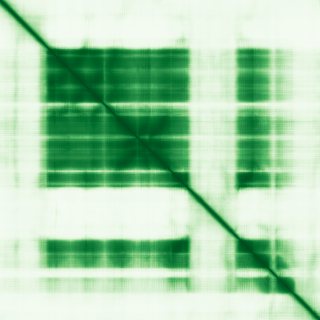
Mean pLDDT
67.8/ 100
Low
676 residues
Confidence breakdown
- Very high(≥ 90)35%
- Confident(70–90)20%
- Low(50–70)7%
- Very low(< 50)38%
Open interactive 3D viewer
AlphaFold (Jumper et al., 2021) · CC BY 4.0
potassium voltage-gated channel subfamily Q member 1
Annotations refreshed 2 months ago.
Diagnostic Grade (Green)
DDG2P
BIALLELIC, autosomal or pseudoautosomalLong QT syndrome
BOTH monoallelic and biallelic (but BIALLELIC mutations cause a more SEVERE disease form), autosomal or pseudoautosomalMonogenic hearing loss
BIALLELIC, autosomal or pseudoautosomalPituitary hormone deficiency
MONOALLELIC, autosomal or pseudoautosomal, NOT imprintedShort QT syndrome
MONOALLELIC, autosomal or pseudoautosomal, NOT imprintedFamilial Meniere Disease
Fetal anomalies
MONOALLELIC, autosomal or pseudoautosomal, imprinted status unknownHypertrophic cardiomyopathy
BOTH monoallelic and biallelic, autosomal or pseudoautosomal+1 more panels — install the extension to see the full list inline on any page.
long QT syndrome 1
Jervell and Lange-Nielsen syndrome 1
atrial fibrillation, familial, 3
Prolonged QT interval
Romano-Ward syndrome
short QT syndrome type 2
Jervell and Lange-Nielsen syndrome
cardiac arrhythmia
familial long QT syndrome
Familial short QT syndrome
Score is the Open Targets composite evidence score (0-1). Higher = stronger gene-disease association.
Potassium voltage-gated channel subfamily KQT member 1
Pore-forming subunit of the voltage-gated potassium (Kv) channel involved in the regulation of cardiomyocyte excitability and important in normal development and functions of myocardium, inner ear, stomach and colon (PubMed:10646604, PubMed:25441029). Associates with KCNE beta subunits that modulates current kinetics (PubMed:10646604, PubMed:11101505, PubMed:19687231, PubMed:8900283, PubMed:9108097, PubMed:9312006). Induces a voltage-dependent current by rapidly activating and slowly deactivating potassium-selective outward current (PubMed:10646604, PubMed:11101505, PubMed:25441029, PubMed:8900283, PubMed:9108097, PubMed:9312006). Also promotes a delayed voltage activated potassium current showing outward rectification characteristic (By similarity). During beta-adrenergic receptor stimulation, participates in cardiac repolarization by associating with KCNE1 to form the I(Ks) cardiac potassium current that increases the amplitude and slows down the activation kinetics of outward potassium current I(Ks) (By similarity) (PubMed:10646604, PubMed:11101505, PubMed:8900283, PubMed:9108097, PubMed:9312006). Muscarinic agonist oxotremorine-M strongly suppresses KCNQ1/KCNE1 current (PubMed:10713961). When associated with KCNE3, forms the potassium channel that is important for cyclic AMP-stimulated intestinal secretion of chloride ions (PubMed:10646604). This interaction with KCNE3 is reduced by 17beta-estradiol, resulting in the reduction of currents (By similarity). During conditions of increased substrate load, maintains the driving force for proximal tubular and intestinal sodium ions absorption, gastric acid secretion, and cAMP-induced jejunal chloride ions secretion (By similarity). Allows the provision of potassium ions to the luminal membrane of the secretory canaliculus in the resting state as well as during stimulated acid secretion (By similarity). When associated with KCNE2, forms a heterooligomer complex leading to currents with an apparently instantaneous activation, a rapid deactivation process and a linear current-voltage relationship and decreases the amplitude of the outward current (PubMed:11101505). When associated with KCNE4, inhibits voltage-gated potassium channel activity (PubMed:19687231). When associated with KCNE5, this complex only conducts current upon strong and continued depolarization (PubMed:12324418). Also forms a heterotetramer with KCNQ5; has a voltage-gated potassium channel activity (PubMed:24855057). Binds with phosphatidylinositol 4,5-bisphosphate (PubMed:25037568). KCNQ1-KCNE2 channel associates with Na(+)-coupled myo-inositol symporter in the apical membrane of choroid plexus epithelium and regulates the myo-inositol gradient between blood and cerebrospinal fluid with an impact on neuron excitability (By similarity)
Curated MONDO disease pages that list KCNQ1 among their top associated genes.
KCNQ1 · P51787
Mean pLDDT
67.8/ 100
Low
676 residues
Confidence breakdown
AlphaFold (Jumper et al., 2021) · CC BY 4.0