
AlphaFold predicted structure
KCNQ4 · P56696
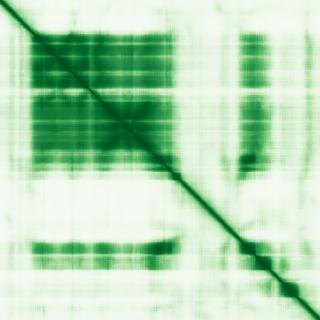
Mean pLDDT
65.3/ 100
Low
695 residues
Confidence breakdown
- Very high(≥ 90)24%
- Confident(70–90)28%
- Low(50–70)9%
- Very low(< 50)39%
Open interactive 3D viewer
AlphaFold (Jumper et al., 2021) · CC BY 4.0
potassium voltage-gated channel subfamily Q member 4
Annotations refreshed 2 months ago.
Diagnostic Grade (Green)
Monogenic hearing loss
BOTH monoallelic and biallelic (but BIALLELIC mutations cause a more SEVERE disease form), autosomal or pseudoautosomalFamilial Meniere Disease
autosomal dominant nonsyndromic hearing loss 2A
multiple sclerosis
nonsyndromic genetic hearing loss
Lambert-Eaton myasthenic syndrome
myasthenia gravis
epilepsy
Rare genetic deafness
Congenital myasthenic syndromes
congenital myasthenic syndrome
Seizure
Score is the Open Targets composite evidence score (0-1). Higher = stronger gene-disease association.
Potassium voltage-gated channel subfamily KQT member 4
Pore-forming subunit of the voltage-gated potassium (Kv) channel involved in the regulation of sensory cells excitability in the cochlea (PubMed:10025409, PubMed:34767770). KCNQ4/Kv7.4 channel is composed of 4 pore-forming subunits assembled as tetramers (PubMed:34767770). Promotes the outflow of potassium ions in the repolarization phase of action potential which plays a role in regulating membrane potential of excitable cells (PubMed:10025409, PubMed:11245603, PubMed:34767770). The channel conducts a slowly activating and deactivating current (PubMed:10025409, PubMed:11245603). Current often shows some inward rectification at positive potentials (PubMed:10025409). Channel may be selectively permeable in vitro to other cations besides potassium, in decreasing order of affinity K(+) = Rb(+) > Cs(+) > Na(+) (PubMed:10025409). Important for normal physiological function of inner ear such as sensory perception of sound (PubMed:10025409, PubMed:10369879)
KCNQ4 · P56696
Mean pLDDT
65.3/ 100
Low
695 residues
Confidence breakdown
AlphaFold (Jumper et al., 2021) · CC BY 4.0