
AlphaFold predicted structure
KCNQ5 · Q9NR82
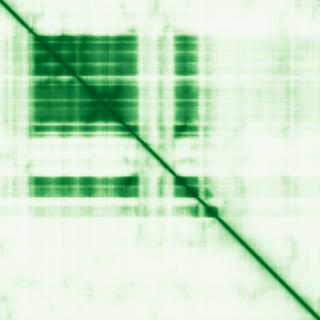
Mean pLDDT
56.4/ 100
Low
932 residues
Confidence breakdown
- Very high(≥ 90)20%
- Confident(70–90)18%
- Low(50–70)6%
- Very low(< 50)56%
Open interactive 3D viewer
AlphaFold (Jumper et al., 2021) · CC BY 4.0
potassium voltage-gated channel subfamily Q member 5
Annotations refreshed 3 months ago.
Diagnostic Grade (Green)
DDG2P
MONOALLELIC, autosomal or pseudoautosomal, imprinted status unknownEarly onset or syndromic epilepsy
MONOALLELIC, autosomal or pseudoautosomal, imprinted status unknownIntellectual disability
MONOALLELIC, autosomal or pseudoautosomal, imprinted status unknownFetal anomalies
MONOALLELIC, autosomal or pseudoautosomal, imprinted status unknownintellectual disability, autosomal dominant 46
multiple sclerosis
Lambert-Eaton myasthenic syndrome
myasthenia gravis
epilepsy
congenital myasthenic syndrome
Congenital myasthenic syndromes
Seizure
Abnormality of the skeletal system
Muscle weakness
Score is the Open Targets composite evidence score (0-1). Higher = stronger gene-disease association.
Potassium voltage-gated channel subfamily KQT member 5
Pore-forming subunit of the voltage-gated potassium (Kv) channel broadly expressed in brain and involved in the regulation of neuronal excitability (PubMed:10787416, PubMed:10816588, PubMed:11159685, PubMed:28669405). Associates with KCNQ3/Kv7.3 pore-forming subunit to form a potassium channel which contributes to M-type current, a slowly activating and deactivating potassium conductance which plays a critical role in determining the subthreshold electrical excitability of neurons (PubMed:10816588, PubMed:11159685). Contributes, with other potassium channels, to the molecular diversity of a heterogeneous population of M-channels, varying in kinetic and pharmacological properties, which underlie this physiologically important current (PubMed:10816588). Also forms a functional channel with KCNQ1/Kv7.1 subunit that may contribute to vasoconstriction and hypertension (PubMed:24855057). Channel may be selectively permeable in vitro to other cations besides potassium, in decreasing order of affinity K(+) = Rb(+) > Cs(+) > Na(+) (PubMed:10816588). Similar to the native M-channel, KCNQ3-KCNQ5 potassium channel is suppressed by activation of the muscarinic acetylcholine receptor CHRM1 (PubMed:10816588)
KCNQ5 · Q9NR82
Mean pLDDT
56.4/ 100
Low
932 residues
Confidence breakdown
AlphaFold (Jumper et al., 2021) · CC BY 4.0