AlphaFold predicted structure
KCNT1 · Q5JUK3
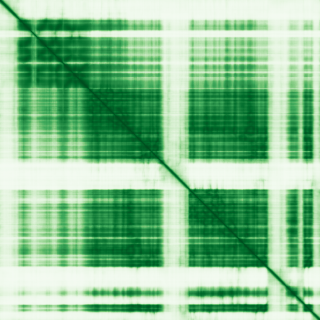
Mean pLDDT
73.9/ 100
Confident
1,230 residues
Confidence breakdown
- Very high(≥ 90)36%
- Confident(70–90)34%
- Low(50–70)6%
- Very low(< 50)24%
AlphaFold (Jumper et al., 2021) · CC BY 4.0
potassium sodium-activated channel subfamily T member 1
Annotations refreshed 9 hours ago.
Diagnostic Grade (Green)
DDG2P
MONOALLELIC, autosomal or pseudoautosomal, imprinted status unknownEarly onset or syndromic epilepsy
MONOALLELIC, autosomal or pseudoautosomal, NOT imprintedIntellectual disability
MONOALLELIC, autosomal or pseudoautosomal, NOT imprintedFetal anomalies
MONOALLELIC, autosomal or pseudoautosomal, NOT imprinteddevelopmental and epileptic encephalopathy, 14
autosomal dominant nocturnal frontal lobe epilepsy 5
autosomal dominant nocturnal frontal lobe epilepsy
malignant migrating partial seizures of infancy
Seizure
hereditary disease
epilepsy
childhood-onset epilepsy syndrome
sleep-related hypermotor epilepsy
familial sleep-related hypermotor epilepsy
Score is the Open Targets composite evidence score (0-1). Higher = stronger gene-disease association.
Potassium channel subfamily T member 1
Sodium-activated K(+) channel (PubMed:37494189). Acts as an important mediator of neuronal membrane excitability (PubMed:37494189). Contributes to the delayed outward currents (By similarity). Regulates neuronal bursting in sensory neurons (By similarity). Contributes to synaptic development and plasticity (By similarity)
KCNT1 · Q5JUK3

Mean pLDDT
73.9/ 100
Confident
1,230 residues
Confidence breakdown
AlphaFold (Jumper et al., 2021) · CC BY 4.0