Skip to content
GenoLensGenoLens

KCNT2

Chr 1q31.3

potassium sodium-activated channel subfamily T member 2

Aliases:
KCa4.2, SLICK, SLO2.1
MANE:
ENST00000294725.14

Annotations refreshed 9 hours ago.

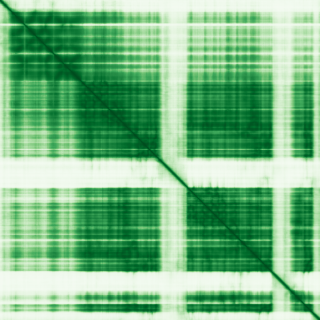
Predicted protein structure

Clinical relevance (Genomics England PanelApp)

Diagnostic Grade (Green)

  • Early onset or syndromic epilepsy

    MONOALLELIC, autosomal or pseudoautosomal, imprinted status unknown
  • Intellectual disability

    MONOALLELIC, autosomal or pseudoautosomal, imprinted status unknown
  • DDG2P

    MONOALLELIC, autosomal or pseudoautosomal, imprinted status unknown

Disease associations (Open Targets)

  • genetic developmental and epileptic encephalopathy

    0.67
  • age-related macular degeneration

    0.41
  • Seizure

    0.41
  • macular degeneration

    0.41
  • degeneration of macula and posterior pole

    0.38
  • retinal disorder

    0.34
  • acquired thrombocytopenia

    0.32
  • wet macular degeneration

    0.31
  • disorder of visual system

    0.29
  • kidney transplant

    0.29

Score is the Open Targets composite evidence score (0-1). Higher = stronger gene-disease association.

Protein function (UniProt)

Potassium channel subfamily T member 2

Sodium-activated and chloride-activated potassium channel (PubMed:14684870, PubMed:16687497, PubMed:25214519, PubMed:27682982, PubMed:29069600, PubMed:29740868). Produces rapidly activating outward rectifier K(+) currents (PubMed:14684870). Contributes to regulate neuronal excitability (PubMed:29069600)

Data sources: HGNC (CC BY 4.0), AlphaFold (CC BY 4.0, Jumper et al. Nature 2021), Genomics England PanelApp (CC BY 4.0), ClinGen, Open Targets (CC0), UniProt.

Not for sole clinical decision-making. Always verify against primary sources.