AlphaFold predicted structure
KDM2A · Q9Y2K7
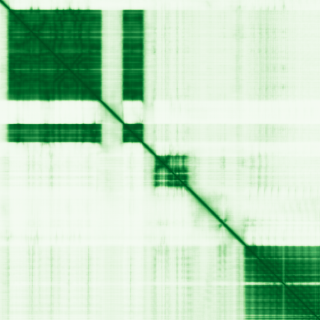
Mean pLDDT
73.3/ 100
Confident
1,162 residues
Confidence breakdown
- Very high(≥ 90)48%
- Confident(70–90)17%
- Low(50–70)4%
- Very low(< 50)31%
AlphaFold (Jumper et al., 2021) · CC BY 4.0
lysine demethylase 2A
Annotations refreshed 10 hours ago.
Moderate Evidence (Amber)
Early onset or syndromic epilepsy
MONOALLELIC, autosomal or pseudoautosomal, NOT imprintedIntellectual disability
MONOALLELIC, autosomal or pseudoautosomal, NOT imprintedneurodegenerative disease
neurodevelopmental disorder
temporomandibular joint disorder
Abnormality of the skeletal system
skin disorder
Alzheimer disease
prostate carcinoma
breast cancer
breast carcinoma
osteoarthritis, knee
Score is the Open Targets composite evidence score (0-1). Higher = stronger gene-disease association.
Lysine-specific demethylase 2A
Histone demethylase that specifically demethylates 'Lys-36' of histone H3, thereby playing a central role in histone code. Preferentially demethylates dimethylated H3 'Lys-36' residue while it has weak or no activity for mono- and tri-methylated H3 'Lys-36'. May also recognize and bind to some phosphorylated proteins and promote their ubiquitination and degradation. Required to maintain the heterochromatic state. Associates with centromeres and represses transcription of small non-coding RNAs that are encoded by the clusters of satellite repeats at the centromere. Required to sustain centromeric integrity and genomic stability, particularly during mitosis. Regulates circadian gene expression by repressing the transcriptional activator activity of CLOCK-BMAL1 heterodimer and RORA in a catalytically-independent manner (PubMed:26037310)
KDM2A · Q9Y2K7

Mean pLDDT
73.3/ 100
Confident
1,162 residues
Confidence breakdown
AlphaFold (Jumper et al., 2021) · CC BY 4.0