
AlphaFold predicted structure
KDM4B · O94953
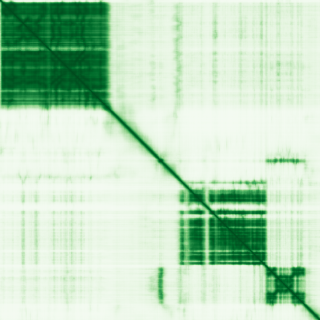
Mean pLDDT
69.5/ 100
Low
1,096 residues
Confidence breakdown
- Very high(≥ 90)34%
- Confident(70–90)27%
- Low(50–70)6%
- Very low(< 50)33%
Open interactive 3D viewer
AlphaFold (Jumper et al., 2021) · CC BY 4.0
lysine demethylase 4B
Annotations refreshed 2 months ago.
Diagnostic Grade (Green)
DDG2P
MONOALLELIC, autosomal or pseudoautosomal, imprinted status unknownFetal anomalies
MONOALLELIC, autosomal or pseudoautosomal, NOT imprintedIntellectual disability
MONOALLELIC, autosomal or pseudoautosomal, NOT imprintedintellectual developmental disorder, autosomal dominant 65
hereditary disease
hypertensive disorder
essential hypertension
complex neurodevelopmental disorder
Increased blood pressure
atrial fibrillation
gout
Neurodevelopmental delay
insomnia
Score is the Open Targets composite evidence score (0-1). Higher = stronger gene-disease association.
Lysine-specific demethylase 4B
Histone demethylase that specifically demethylates 'Lys-9' of histone H3, thereby playing a role in histone code. Does not demethylate histone H3 'Lys-4', H3 'Lys-27', H3 'Lys-36' nor H4 'Lys-20'. Only able to demethylate trimethylated H3 'Lys-9', with a weaker activity than KDM4A, KDM4C and KDM4D. Demethylation of Lys residue generates formaldehyde and succinate (PubMed:16603238, PubMed:28262558). Plays a critical role in the development of the central nervous system (CNS)
KDM4B · O94953
Mean pLDDT
69.5/ 100
Low
1,096 residues
Confidence breakdown
AlphaFold (Jumper et al., 2021) · CC BY 4.0