
AlphaFold predicted structure
KDM6B · O15054
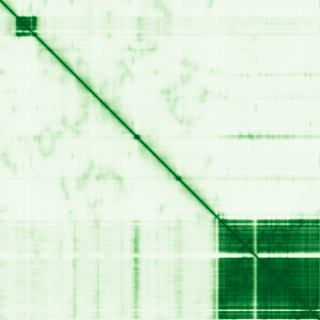
Mean pLDDT
57.3/ 100
Low
1,643 residues
Confidence breakdown
- Very high(≥ 90)29%
- Confident(70–90)7%
- Low(50–70)5%
- Very low(< 50)59%
Open interactive 3D viewer
AlphaFold (Jumper et al., 2021) · CC BY 4.0
lysine demethylase 6B
Annotations refreshed 2 months ago.
Diagnostic Grade (Green)
DDG2P
MONOALLELIC, autosomal or pseudoautosomal, imprinted status unknownEarly onset or syndromic epilepsy
MONOALLELIC, autosomal or pseudoautosomal, NOT imprintedIntellectual disability
MONOALLELIC, autosomal or pseudoautosomal, imprinted status unknownFetal anomalies
MONOALLELIC, autosomal or pseudoautosomal, NOT imprintedneurodevelopmental disorder with coarse facies and mild distal skeletal abnormalities
hereditary disease
syndromic intellectual disability
autosomal recessive non-syndromic intellectual disability
Neurodevelopmental abnormality
Neurodevelopmental delay
Intellectual disability
autism spectrum disorder
Abnormality of the skeletal system
arthropathy
Score is the Open Targets composite evidence score (0-1). Higher = stronger gene-disease association.
Lysine-specific demethylase 6B
Histone demethylase that specifically demethylates 'Lys-27' of histone H3, thereby playing a central role in histone code (PubMed:17713478, PubMed:17825402, PubMed:17851529, PubMed:18003914). Demethylates trimethylated and dimethylated H3 'Lys-27' (PubMed:17713478, PubMed:17825402, PubMed:17851529, PubMed:18003914). Plays a central role in regulation of posterior development, by regulating HOX gene expression (PubMed:17851529). Involved in inflammatory response by participating in macrophage differentiation in case of inflammation by regulating gene expression and macrophage differentiation (PubMed:17825402). Plays a demethylase-independent role in chromatin remodeling to regulate T-box family member-dependent gene expression by acting as a link between T-box factors and the SMARCA4-containing SWI/SNF remodeling complex (By similarity)
KDM6B · O15054
Mean pLDDT
57.3/ 100
Low
1,643 residues
Confidence breakdown
AlphaFold (Jumper et al., 2021) · CC BY 4.0