
AlphaFold predicted structure
KHDC3L · Q587J8
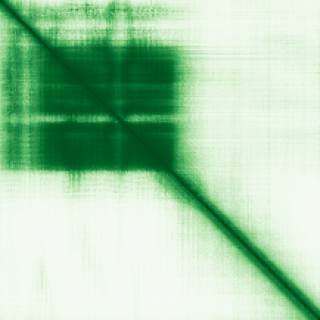
Mean pLDDT
66.7/ 100
Low
217 residues
Confidence breakdown
- Very high(≥ 90)31%
- Confident(70–90)12%
- Low(50–70)21%
- Very low(< 50)36%
Open interactive 3D viewer
AlphaFold (Jumper et al., 2021) · CC BY 4.0
KH domain containing 3 like, subcortical maternal complex member
Annotations refreshed 2 months ago.
Diagnostic Grade (Green)
Multi locus imprinting disorders
BOTH monoallelic and biallelic (but BIALLELIC mutations cause a more SEVERE disease form), autosomal or pseudoautosomalMonogenic short stature
BOTH monoallelic and biallelic (but BIALLELIC mutations cause a more SEVERE disease form), autosomal or pseudoautosomalhydatidiform mole
hydatidiform mole, recurrent, 2
complete hydatidiform mole
hereditary disease
injury
benign neoplasm of eye
myopia
refractive error
Hypermetropia
primary angle-closure glaucoma
Score is the Open Targets composite evidence score (0-1). Higher = stronger gene-disease association.
KH domain-containing protein 3
Component of the subcortical maternal complex (SCMC), a multiprotein complex that plays a key role in early embryonic development (By similarity). The SCMC complex is a structural constituent of cytoplasmic lattices, which consist in fibrous structures found in the cytoplasm of oocytes and preimplantation embryos (By similarity). They are required to store maternal proteins critical for embryonic development, such as proteins that control epigenetic reprogramming of the preimplantation embryo, and prevent their degradation or activation (By similarity). KHDC3 ensures proper spindle assembly by regulating the localization of AURKA via RHOA signaling and of PLK1 via a RHOA-independent process (By similarity). Required for the localization of MAD2L1 to kinetochores to enable spindle assembly checkpoint function (By similarity). As part of the OOEP-KHDC3 scaffold, recruits BLM and TRIM25 to DNA replication forks, thereby promoting the ubiquitination of BLM by TRIM25, enhancing BLM retainment at replication forks and therefore promoting stalled replication fork restart (By similarity). Regulates homologous recombination-mediated DNA repair via recruitment of RAD51 to sites of DNA double-strand breaks, and sustainment of PARP1 activity, which in turn modulates downstream ATM or ATR activation (PubMed:31609975). Activation of ATM or ATR in response to DNA double-strand breaks may be cell-type specific (By similarity). Its role in DNA double-strand break repair is independent of its role in restarting stalled replication forks (By similarity). Promotes neural stem cell neurogenesis and neuronal differentiation in the hippocampus (By similarity). May regulate normal development of learning, memory and anxiety (By similarity). Capable of binding RNA (By similarity)
KHDC3L · Q587J8
Mean pLDDT
66.7/ 100
Low
217 residues
Confidence breakdown
AlphaFold (Jumper et al., 2021) · CC BY 4.0