Skip to content
GenoLensGenoLens

KITLG

Chr 12q21.32

KIT ligand

Aliases:
SCF, SF, Kitl, KL-1, FPH2
MANE:
ENST00000644744.1

Annotations refreshed 9 hours ago.

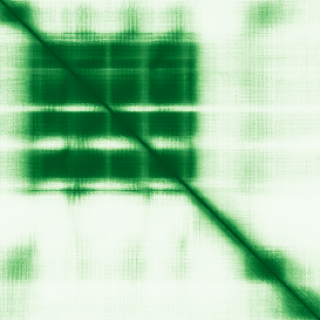
Predicted protein structure

Clinical relevance (Genomics England PanelApp)

Diagnostic Grade (Green)

  • Neurofibromatosis Type 1

    MONOALLELIC, autosomal or pseudoautosomal, imprinted status unknown
  • Pigmentary skin disorders

    MONOALLELIC, autosomal or pseudoautosomal, NOT imprinted
  • Monogenic hearing loss

    MONOALLELIC, autosomal or pseudoautosomal, imprinted status unknown
  • Mosaic skin disorders - deep sequencing

    MONOALLELIC, autosomal or pseudoautosomal, NOT imprinted
  • DDG2P

    MONOALLELIC, autosomal or pseudoautosomal, imprinted status unknown

Disease associations (Open Targets)

  • hyperpigmentation with or without hypopigmentation, familial progressive

    0.68
  • Waardenburg syndrome, IIa 2F

    0.55
  • autosomal dominant nonsyndromic hearing loss 69

    0.51
  • testicular cancer

    0.51
  • Non-syndromic genetic deafness

    0.48
  • hair color

    0.48
  • familial progressive hyper- and hypopigmentation

    0.47
  • actinic keratosis

    0.47
  • testicular germ cell tumor

    0.43
  • male reproductive organ cancer

    0.41

Score is the Open Targets composite evidence score (0-1). Higher = stronger gene-disease association.

Protein function (UniProt)

Kit ligand

Ligand for the receptor-type protein-tyrosine kinase KIT. Plays an essential role in the regulation of cell survival and proliferation, hematopoiesis, stem cell maintenance, gametogenesis, mast cell development, migration and function, and in melanogenesis. KITLG/SCF binding can activate several signaling pathways. Promotes phosphorylation of PIK3R1, the regulatory subunit of phosphatidylinositol 3-kinase, and subsequent activation of the kinase AKT1. KITLG/SCF and KIT also transmit signals via GRB2 and activation of RAS, RAF1 and the MAP kinases MAPK1/ERK2 and/or MAPK3/ERK1. KITLG/SCF and KIT promote activation of STAT family members STAT1, STAT3 and STAT5. KITLG/SCF and KIT promote activation of PLCG1, leading to the production of the cellular signaling molecules diacylglycerol and inositol 1,4,5-trisphosphate. KITLG/SCF acts synergistically with other cytokines, probably interleukins

Data sources: HGNC (CC BY 4.0), AlphaFold (CC BY 4.0, Jumper et al. Nature 2021), Genomics England PanelApp (CC BY 4.0), ClinGen, Open Targets (CC0), UniProt.

Not for sole clinical decision-making. Always verify against primary sources.