AlphaFold predicted structure
KLHL24 · Q6TFL4
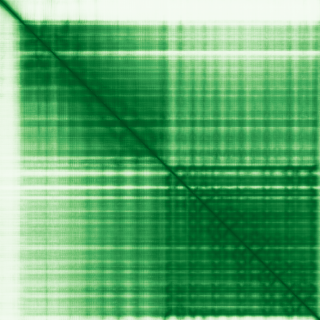
Mean pLDDT
87.8/ 100
Confident
600 residues
Confidence breakdown
- Very high(≥ 90)73%
- Confident(70–90)17%
- Low(50–70)3%
- Very low(< 50)7%
AlphaFold (Jumper et al., 2021) · CC BY 4.0
kelch like family member 24
Annotations refreshed 9 hours ago.
Diagnostic Grade (Green)
Epidermolysis bullosa
MONOALLELIC, autosomal or pseudoautosomal, NOT imprintedEpidermolysis bullosa and congenital skin fragility
MONOALLELIC, autosomal or pseudoautosomal, NOT imprintedHypertrophic cardiomyopathy
BIALLELIC, autosomal or pseudoautosomalPaediatric or syndromic cardiomyopathy
BOTH monoallelic and biallelic, autosomal or pseudoautosomalepidermolysis bullosa simplex 6, generalized, with scarring and hair loss
cardiomyopathy, familial hypertrophic, 29, with polyglucosan bodies
cicatricial alopecia
Basal epidermolysis bullosa simplex
Generalized epidermolysis bullosa simplex, non-Dowling-Meara type
atrial fibrillation
esophageal disorder
gastroesophageal reflux disease
hypertensive disorder
COVID-19
Score is the Open Targets composite evidence score (0-1). Higher = stronger gene-disease association.
Kelch-like protein 24
Necessary to maintain the balance between intermediate filament stability and degradation, a process that is essential for skin integrity (PubMed:27889062). As part of the BCR(KLHL24) E3 ubiquitin ligase complex, mediates ubiquitination of KRT14 and controls its levels during keratinocytes differentiation (PubMed:27798626). Specifically reduces kainate receptor-mediated currents in hippocampal neurons, most probably by modulating channel properties (By similarity). Has a crucial role in cardiac development and function (PubMed:30715372)
KLHL24 · Q6TFL4

Mean pLDDT
87.8/ 100
Confident
600 residues
Confidence breakdown
AlphaFold (Jumper et al., 2021) · CC BY 4.0