
AlphaFold predicted structure
KLHL3 · Q9UH77
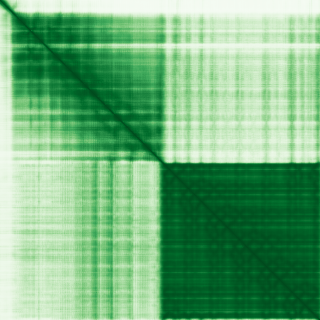
Mean pLDDT
90.5/ 100
Very high
587 residues
Confidence breakdown
- Very high(≥ 90)71%
- Confident(70–90)23%
- Low(50–70)1%
- Very low(< 50)4%
Open interactive 3D viewer
AlphaFold (Jumper et al., 2021) · CC BY 4.0
kelch like family member 3
Annotations refreshed 2 months ago.
Diagnostic Grade (Green)
Extreme early-onset hypertension
BOTH monoallelic and biallelic, autosomal or pseudoautosomalRenal tubulopathies
BOTH monoallelic and biallelic, autosomal or pseudoautosomalpseudohypoaldosteronism type 2D
pseudohypoaldosteronism type 2A
atrial fibrillation
pseudohypoaldosteronism type 2
neurodegenerative disease
hereditary disease
prostatitis
benign neoplasm of adrenal gland
essential hypertension
cerebral palsy
Score is the Open Targets composite evidence score (0-1). Higher = stronger gene-disease association.
Kelch-like protein 3
Substrate-specific adapter of a BCR (BTB-CUL3-RBX1) E3 ubiquitin ligase complex that acts as a regulator of ion transport in the distal nephron (PubMed:14528312, PubMed:22406640, PubMed:23387299, PubMed:23453970, PubMed:23576762, PubMed:23665031, PubMed:25313067, PubMed:35093948). The BCR(KLHL3) complex acts by mediating ubiquitination and degradation of WNK1 and WNK4, two activators of Na-Cl cotransporter SLC12A3/NCC in distal convoluted tubule cells of kidney, thereby regulating NaCl reabsorption (PubMed:23387299, PubMed:23453970, PubMed:23576762, PubMed:23665031, PubMed:25313067, PubMed:35093948). The BCR(KLHL3) complex also mediates ubiquitination and degradation of WNK3 (PubMed:35179207). The BCR(KLHL3) complex also mediates ubiquitination of CLDN8, a tight-junction protein required for paracellular chloride transport in the kidney, leading to its degradation (By similarity)
KLHL3 · Q9UH77
Mean pLDDT
90.5/ 100
Very high
587 residues
Confidence breakdown
AlphaFold (Jumper et al., 2021) · CC BY 4.0