AlphaFold predicted structure
KLHL40 · Q2TBA0
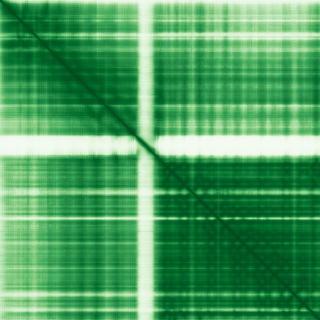
Mean pLDDT
89.4/ 100
Confident
621 residues
Confidence breakdown
- Very high(≥ 90)76%
- Confident(70–90)18%
- Low(50–70)1%
- Very low(< 50)5%
AlphaFold (Jumper et al., 2021) · CC BY 4.0
kelch like family member 40
Annotations refreshed 10 hours ago.
Diagnostic Grade (Green)
Arthrogryposis
BIALLELIC, autosomal or pseudoautosomalCongenital myopathy
BIALLELIC, autosomal or pseudoautosomalDDG2P
BIALLELIC, autosomal or pseudoautosomalFetal anomalies
BIALLELIC, autosomal or pseudoautosomalIntellectual disability
BIALLELIC, autosomal or pseudoautosomalFetal hydrops
BIALLELIC, autosomal or pseudoautosomalnemaline myopathy 8
severe congenital nemaline myopathy
Abnormality of the skeletal system
nemaline myopathy
Jaundice
hereditary disease
Emery-Dreifuss muscular dystrophy
Congenital myasthenic syndromes
inclusion body myopathy with Paget disease of bone and frontotemporal dementia
Distal myopathy, Nonaka type
Score is the Open Targets composite evidence score (0-1). Higher = stronger gene-disease association.
Kelch-like protein 40
Substrate-specific adapter of a BCR (BTB-CUL3-RBX1) E3 ubiquitin ligase complex that acts as a key regulator of skeletal muscle development (PubMed:23746549). The BCR(KLHL40) complex acts by mediating ubiquitination and degradation of TFDP1, thereby regulating the activity of the E2F:DP transcription factor complex (By similarity). Promotes stabilization of LMOD3 by acting as a negative regulator of LMOD3 ubiquitination; the molecular process by which it negatively regulates ubiquitination of LMOD3 is however unclear (By similarity)
KLHL40 · Q2TBA0

Mean pLDDT
89.4/ 100
Confident
621 residues
Confidence breakdown
AlphaFold (Jumper et al., 2021) · CC BY 4.0