
AlphaFold predicted structure
KLHL7 · Q8IXQ5
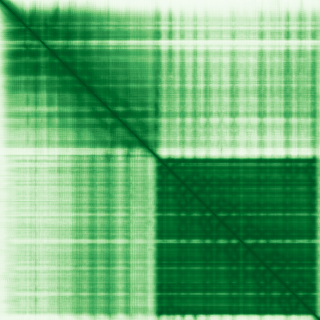
Mean pLDDT
91.2/ 100
Very high
586 residues
Confidence breakdown
- Very high(≥ 90)77%
- Confident(70–90)17%
- Low(50–70)4%
- Very low(< 50)2%
Open interactive 3D viewer
AlphaFold (Jumper et al., 2021) · CC BY 4.0
kelch like family member 7
Annotations refreshed 2 months ago.
Diagnostic Grade (Green)
Arthrogryposis
BIALLELIC, autosomal or pseudoautosomalDDG2P
BIALLELIC, autosomal or pseudoautosomalFetal anomalies
BIALLELIC, autosomal or pseudoautosomalIntellectual disability
BIALLELIC, autosomal or pseudoautosomalRetinal disorders
MONOALLELIC, autosomal or pseudoautosomal, imprinted status unknownGlaucoma (developmental)
Structural eye disease
MONOALLELIC, autosomal or pseudoautosomal, NOT imprintedretinitis pigmentosa
cold-induced sweating syndrome
Retinal dystrophy
Cold-induced sweating syndrome 1
hereditary disease
Neurodevelopmental delay
autosomal dominant retinitis pigmentosa
eye disorder
Ulnar deviation of the wrist
Bohring-Opitz syndrome
Score is the Open Targets composite evidence score (0-1). Higher = stronger gene-disease association.
Kelch-like protein 7
Substrate-specific adapter of a BCR (BTB-CUL3-RBX1) E3 ubiquitin ligase complex. The BCR(KLHL7) complex acts by mediating ubiquitination and subsequent degradation of substrate proteins. Probably mediates 'Lys-48'-linked ubiquitination
KLHL7 · Q8IXQ5
Mean pLDDT
91.2/ 100
Very high
586 residues
Confidence breakdown
AlphaFold (Jumper et al., 2021) · CC BY 4.0