
AlphaFold predicted structure
KPNA3 · O00505
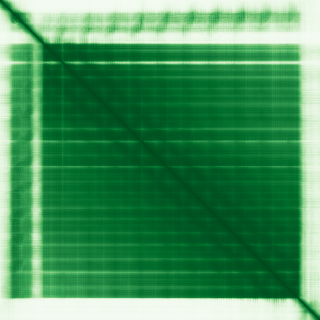
Mean pLDDT
86.5/ 100
Confident
521 residues
Confidence breakdown
- Very high(≥ 90)75%
- Confident(70–90)5%
- Low(50–70)9%
- Very low(< 50)10%
Open interactive 3D viewer
AlphaFold (Jumper et al., 2021) · CC BY 4.0
karyopherin subunit alpha 3
Annotations refreshed 3 months ago.
Diagnostic Grade (Green)
Childhood onset hereditary spastic paraplegia
MONOALLELIC, autosomal or pseudoautosomal, imprinted status unknownDDG2P
MONOALLELIC, autosomal or pseudoautosomal, NOT imprintedspastic paraplegia 88, autosomal dominant
influenza
dengue disease
Abnormality of the skeletal system
autosomal dominant pure spastic paraplegia
Autosomal dominant spastic paraplegia type 37
atrial fibrillation
Alzheimer disease
Parkinson disease
neurodegenerative disease
Score is the Open Targets composite evidence score (0-1). Higher = stronger gene-disease association.
Importin subunit alpha-4
Functions in nuclear protein import as an adapter protein for nuclear receptor KPNB1. Binds specifically and directly to substrates containing either a simple or bipartite NLS motif. Docking of the importin/substrate complex to the nuclear pore complex (NPC) is mediated by KPNB1 through binding to nucleoporin FxFG repeats and the complex is subsequently translocated through the pore by an energy requiring, Ran-dependent mechanism. At the nucleoplasmic side of the NPC, Ran binds to importin-beta and the three components separate and importin-alpha and -beta are re-exported from the nucleus to the cytoplasm where GTP hydrolysis releases Ran from importin. The directionality of nuclear import is thought to be conferred by an asymmetric distribution of the GTP- and GDP-bound forms of Ran between the cytoplasm and nucleus. In vitro, mediates the nuclear import of human cytomegalovirus UL84 by recognizing a non-classical NLS. Recognizes NLSs of influenza A virus nucleoprotein probably through ARM repeats 7-9
KPNA3 · O00505
Mean pLDDT
86.5/ 100
Confident
521 residues
Confidence breakdown
AlphaFold (Jumper et al., 2021) · CC BY 4.0