
AlphaFold predicted structure
KRT10 · P13645
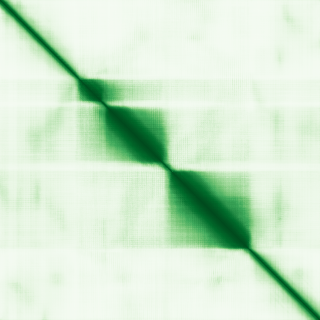
Mean pLDDT
64.3/ 100
Low
584 residues
Confidence breakdown
- Very high(≥ 90)39%
- Confident(70–90)9%
- Low(50–70)5%
- Very low(< 50)48%
Open interactive 3D viewer
AlphaFold (Jumper et al., 2021) · CC BY 4.0
keratin 10
Annotations refreshed 2 months ago.
Diagnostic Grade (Green)
Epidermolysis bullosa and congenital skin fragility
MONOALLELIC, autosomal or pseudoautosomal, imprinted status unknownIchthyosis and erythrokeratoderma
MONOALLELIC, autosomal or pseudoautosomal, NOT imprintedMosaic skin disorders - deep sequencing
MONOALLELIC, autosomal or pseudoautosomal, NOT imprintedPalmoplantar keratoderma and erythrokeratodermas
MONOALLELIC, autosomal or pseudoautosomal, NOT imprintedPalmoplantar keratodermas
MONOALLELIC, autosomal or pseudoautosomal, NOT imprintedPigmentary skin disorders
BOTH monoallelic and biallelic, autosomal or pseudoautosomalRare genetic inflammatory skin disorders
MONOALLELIC, autosomal or pseudoautosomal, NOT imprintedPeeling skin syndrome
BOTH monoallelic and biallelic, autosomal or pseudoautosomalepidermolytic hyperkeratosis 2A, autosomal dominant
epidermolytic ichthyosis
congenital reticular ichthyosiform erythroderma
ichthyosis, annular epidermolytic 1
annular epidermolytic ichthyosis
epidermolytic hyperkeratosis 2B, autosomal recessive
pachyonychia congenita
epidermolytic palmoplantar keratoderma, 1
Palmoplantar keratoderma
hereditary palmoplantar keratoderma
Score is the Open Targets composite evidence score (0-1). Higher = stronger gene-disease association.
Keratin, type I cytoskeletal 10
Structural component of intermediate filaments in suprabasal keratinocytes of stratified epithelia. Forms heteropolymers primarily with the type II keratin KRT1, and also with KRT2, assembling into intermediate filament networks that support terminal differentiation, mechanical resilience, and epidermal barrier formation
KRT10 · P13645
Mean pLDDT
64.3/ 100
Low
584 residues
Confidence breakdown
AlphaFold (Jumper et al., 2021) · CC BY 4.0